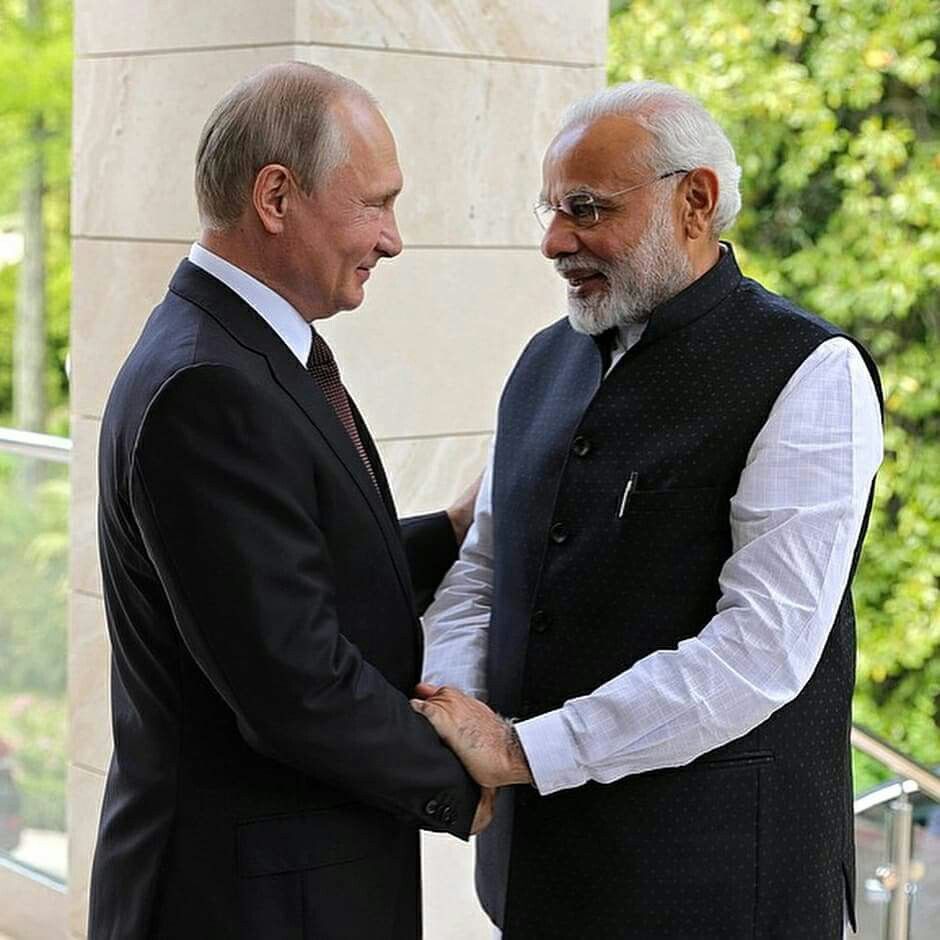
On December 4–5, 2025, Vladimir Putin landed in New Delhi for what marks his first visit to India since the war in Ukraine began — and arguably one of the most consequential high-stakes diplomatic trips of the year for both Russia and India.
This isn’t just a courtesy call — it’s a renewed assertion of the decades-long “special and privileged strategic partnership” between Moscow and New Delhi.
In a world where geopolitical fault-lines are being redrawn, this visit sends a strong signal: Russia wants to show it has options beyond its post-Ukraine isolation, and India wants to reaffirm its sovereignty — keeping its historic ties alive even while balancing pressures from the West.
What’s On the Agenda — Trade, Defence, Technology & More 🚀
• A Broad 2030 Economic Roadmap
During the visit, Russia and India plan to sign a comprehensive “Development Programme of Strategic Areas of Economic Cooperation until 2030.”
That roadmap will cover sectors beyond energy — from industry, aerospace and agriculture to health, transport, labor mobility, and technology.
• Trade Diversification & Attempts to Close the Imbalance
Bilateral trade recently surged — driven mostly by India’s heavy imports of Russian oil.
But now Russia is signaling a push to import more Indian goods: pharmaceuticals, engineering and machinery products, agriculture and food items — in effect, giving India a shot at reducing the trade deficit.
• Defence & Security Cooperation Remains Central
Defense ties remain a core pillar: discussions reportedly include additional acquisitions or upgrades — such as more S-400 air defense systems, possible fifth-generation jets like the Su-57, and deeper cooperation on logistics.
Russia’s ratification of a reciprocal logistics agreement (RELOS) with India — allowing mutual use of ports, airspace, and infrastructure — was completed just before this visit.
• Civil Nuclear, Space, Tech, Labour — The New Frontiers
Beyond hydrocarbons and weapons, the two countries are eyeing cooperation in civil nuclear energy (including small modular reactors), space and technology, transport, healthcare and labor mobility programmes.
This signals a shift: India–Russia ties aren’t just about defense or energy anymore — they aim to become a full-spectrum strategic partnership for the 21st century.
What It Means for India — Strategic Autonomy and a Multipolar Future
For India, hosting Putin now — despite strong pressure from Western powers — underscores the country’s insistence on strategic autonomy. As one expert put it: Moscow isn’t allowing itself to become “a junior partner to Beijing”; by coming to New Delhi, Russia is telling the world it values India as a major rival power and a long-term partner.
New Delhi’s willingness to deepen ties with Moscow — even as global geopolitics polarize — suggests that India intends to chart an independent path: balancing between major powers without committing solely to any.
If managed well, the planned diversification into industry, technology, agriculture and trade may reduce India’s over-reliance on volatile energy markets — and signal to global partners that it remains open, pragmatic and forward-looking.
What It Means for Russia — Beyond Isolation, Towards Strategic Resilience
For Moscow, still reeling from the global fallout of the Ukraine war and economic sanctions, this visit offers vital reaffirmation that India remains a pillar of its international strategy. That sends a message: Russia isn’t simply tilting toward China — it values a multipolar world, and sees India as a central player within it.
The deal to sign a long-term economic roadmap also offers Russia a lifeline: new markets for its technologies, space, energy and defense goods beyond traditional Western and allied buyers.
Defence-industrial collaboration and logistics cooperation may give Russia much-needed strategic flexibility — ensuring that its armed forces remain relevant, and its defense exports viable, even under sanctions.
Great Stakes, Big Challenges — What Could Go Wrong
- Trade imbalance and economic risk: Historically, India’s imports from Russia have heavily outweighed exports — if diversification doesn’t happen fast, India may remain vulnerable to oil-price volatility and currency instability.
- Sanctions & Western pressure: Deepening ties with Russia could strain India’s relationships with Western countries — especially if defense deals or energy imports attract economic or political backlash.
- Supply-side uncertainty: With ongoing war and sanctions, Russia may struggle to deliver advanced defense technology or to fund large-scale industrial collaboration projects in time.
- Balancing Act Risks: India’s attempt to stay non-aligned and strategic could come under pressure — missteps may force tougher choices between competing global powers.
Final Thought: A Strategic Reset in a Changing Global Order
Vladimir Putin’s 2025 visit to India isn’t just another high-level diplomatic handshake. It’s a statement — by both countries — that in a world scrambling under shifting alliances, sanctions, and geopolitical uncertainty, the India–Russia partnership intends to evolve. From energy and defense to space, technology and trade, they’re aiming for a diversified, resilient and long-term alliance: one that challenges bipolar world narratives and emphasises multipolar balance.
Whether this visit will be remembered as a turning point or another milestone depends on execution. But one thing seems clear: global power dynamics are in motion — and India and Russia want to make sure they’re moving together.
✅ References
- Putin arrived in New Delhi on December 4, 2025 — his first visit since the war in Ukraine began. Reuters+2The Indian Express+2
- The visit is for the 23rd annual India–Russia Annual Summit (2025). The Indian Express+2The Times of India+2
- Main agenda includes review of the long-standing “special and privileged strategic partnership”, with focus on defence, energy, trade, economic, and global issues. India Today+3The Indian Express+3The Times of India+3
- Defence cooperation — discussions expected around advanced military hardware such as additional S-400 air defence system for India. India Today+1
- Economic cooperation and trade: India and Russia aim to diversify bilateral trade beyond energy, pushing increased Indian exports (pharma, machinery, marine/agricultural products, consumer goods, etc.) to reduce trade imbalance. The Times of India+4The Times of India+4The Economic Times+4