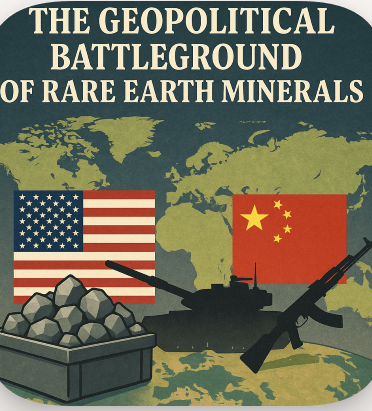
In 2025, China’s decision to impose export controls on rare earth elements sent tremors through the global economy. These minerals—essential for everything from electric vehicles and semiconductors to advanced defense systems—are the backbone of modern technology. By tightening supply, Beijing reminded the world that control over critical resources translates directly into geopolitical leverage.
⚡ Global Supply Chain Shock
- Industries across North America, Europe, and Asia faced immediate shortages, exposing their dependence on Chinese rare earths.
- Prices surged, and production timelines for EV batteries, wind turbines, and missile guidance systems were disrupted.
- The crisis underscored how resource chokepoints can be wielded as instruments of statecraft.
🌐 Strategic Responses
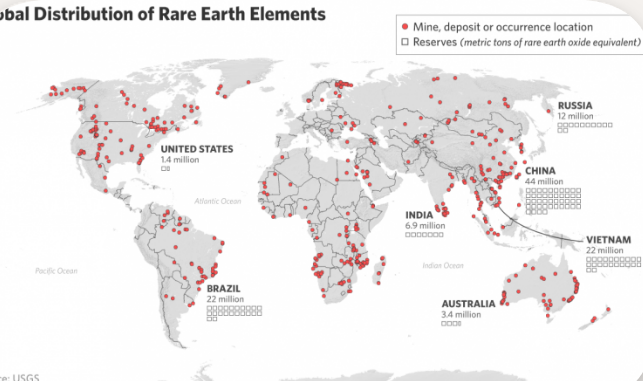
- Diversification: Nations accelerated investments in alternative sources, from mines in Australia and Africa to recycling initiatives.
- Innovation: Research into substitutes and new extraction technologies gained momentum.
- Alliances: Strategic partnerships emerged, with countries pooling resources to reduce vulnerability.
📖 Lesson for Policymakers
The rare earth episode illustrates a broader truth: supply chain control equals geopolitical power. In a world racing toward clean energy and digital transformation, whoever dominates the flow of critical minerals holds sway over the future of technology, security, and economic resilience.