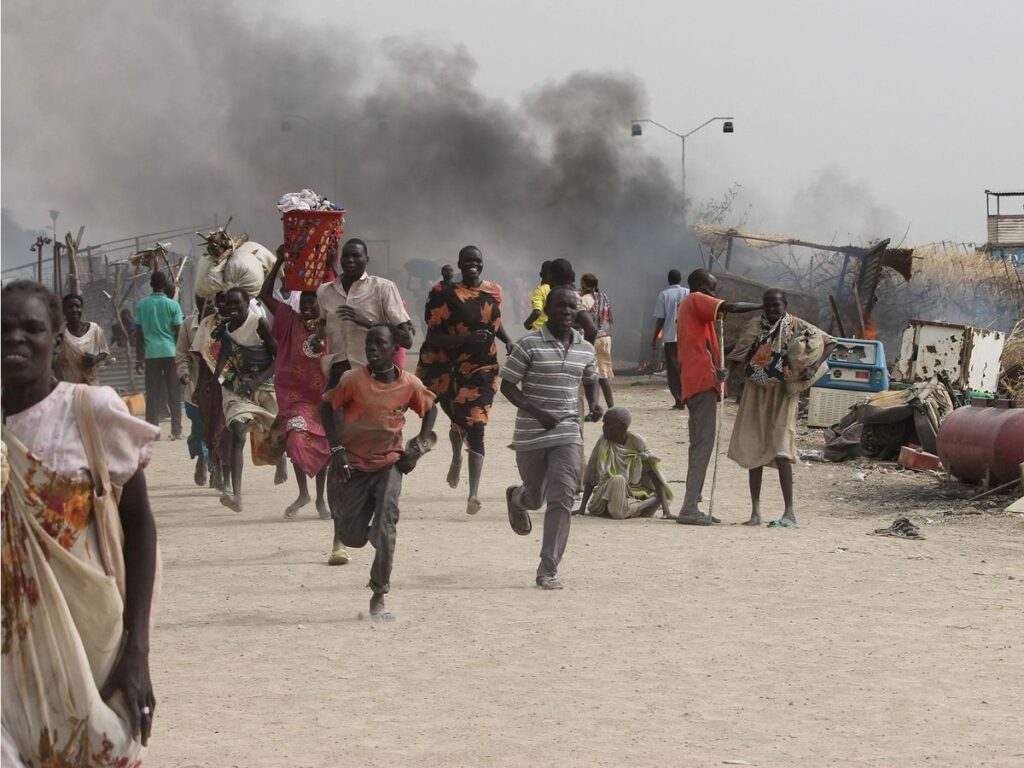
A grave humanitarian catastrophe is unfolding in El Fasher and nearby regions of Sudan, where famine has been declared by the world’s leading hunger-monitoring agency. The Washington Post
The narrative of drought, conflict and displacement has reached a new apex: mass starvation is no longer a looming possibility, but a current reality; communities are dying of hunger even as the world watches.
In the protracted conflict between the regular armed forces of Sudan and the paramilitary Rapid Support Forces (RSF), the collapse of basic services and humanitarian access has turned the “forgotten war” of Darfur and surrounding belts into a full-blown famine zone.
This crisis strikes at the heart of the politics-development-security nexus:
- Politics: The fractured governance of Sudan, the power struggle between factions and external interventions have hollowed out the state’s protective capacity.
- Development: Decades of under-investment in rural infrastructure, agrarian resilience and social safety nets have made the population extremely vulnerable to disruption.
- Security: Violence, displacement and restricted access for aid agencies have prevented the delivery of lifesaving relief.
Thus, the famine is neither purely natural nor purely economic—it is a political failure dressed in humanitarian terms.
For global actors, the challenge is three-fold: to provide immediate relief, to insist on long-term structural protections (food security, resilient livelihoods) and to demand political accountability.
Failure in any one axis will make the others unsustainable: relief without governance reform will re-create dependency; development without security will collapse in the next convulsion; politics without responsibility will perpetuate the cycle.
#SudanCrisis #DarfurFamine #HumanitarianEmergency #GlobalDevelopment #ConflictAndHunger #AfricaNews #FoodSecurity #Governance #SecurityStudies #CrisisResponse