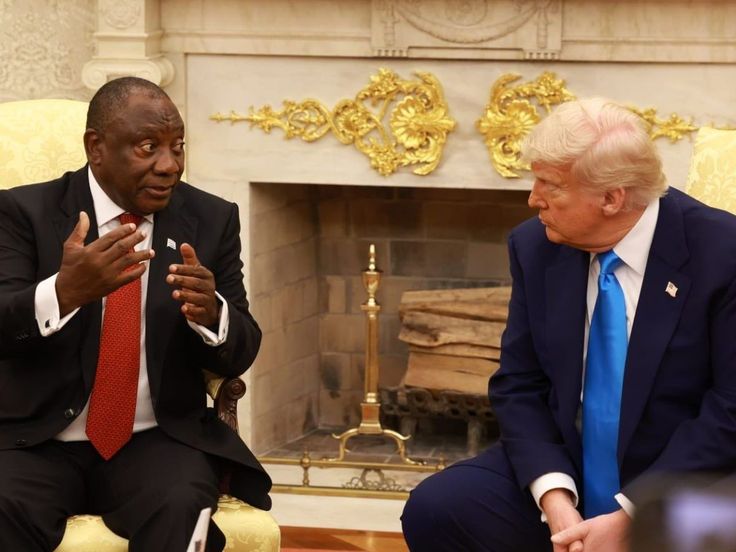
South Africa’s Presidency has firmly dismissed the notion of handing over the G20 presidency to a low-ranking American diplomat, a development that has sparked significant international interest and elevated diplomatic tensions between Pretoria and Washington. The standoff comes at a time when South Africa is preparing to conclude its historic G20 leadership — the first ever held on African soil.
A Turning Point in US–South Africa Relations
The dispute began after the United States initially announced that it would boycott the Johannesburg G20 summit. The boycott was reportedly connected to Washington’s objections over domestic matters in South Africa, including disputed claims regarding the treatment of white Afrikaner farmers — allegations that Pretoria strongly rejected.
In the days leading up to the summit, however, the US signaled a potential shift in position. According to the Presidency, South Africa received a late communication from Washington indicating that the United States might attend the handover ceremony “in some form.” This sudden change, while welcomed diplomatically, came with a complication: the US intended to send only a chargé d’affaires — a mid-level embassy official — rather than a senior representative or head of state.
Pretoria Pushes Back: “The Presidency Won’t Hand Over to a Junior Official”
South Africa responded swiftly and decisively. The Presidency conveyed that President Cyril Ramaphosa found such a delegation inappropriate for a ceremony as symbolically important as the G20 presidency handover.
Presidential spokespersons made it clear that South Africa would not permit the dignity of its leadership role to be diminished by conducting the handover to a low-level official. To Pretoria, such an action would create an imbalance of respect — particularly given the stature of the G20 and the significance of South Africa’s position within it.
Behind the scenes, government insiders described the US proposal as “disrespectful,” hinting at a deeper frustration: Washington’s approach seemed to disregard both South Africa’s role as host and Africa’s growing position in global economic discussions.
A Matter of Principle, Not Confrontation
Despite the firmness of the response, South Africa has maintained a polite and diplomatic tone throughout. Ramaphosa has repeatedly stated that the G20 is not a contest of political egos but an essential global forum where nations collaborate on economic stability, climate resilience, and development.
From South Africa’s perspective, symbolism matters. The G20 presidency is not only an administrative function — it also reflects leadership, legitimacy, and global trust. Allowing the handover to proceed with a minor official from the United States, especially after an attempted boycott, would undermine the seriousness of the process.
Pretoria insists that the issue is not anti-American sentiment but rather a principled stance: if the United States wishes to participate in a leadership transition of global importance, it must do so with appropriate representation.
Growing Tensions Over G20 Outcomes
Aside from the symbolic handover, tensions have also surfaced regarding the final G20 documents. The United States reportedly objected to a full consensus declaration and instead signaled preference for a Chair’s Statement — a move that observers say could dilute the power of the summit’s collective voice.
South Africa interpreted this as further evidence of Washington’s intention to minimize its engagement while retaining influence over outcomes. Ramaphosa, however, held firm, reminding the international community that the G20 would “move forward and take decisions” with or without unanimous participation.
The message was clear: South Africa would not allow any one country — no matter how powerful — to derail the collective mission of the summit.
Symbolism and Sovereignty: Why This Moment Matters
The dispute, at its core, is about sovereignty, dignity, and the place of Africa on the world stage.
As the first African nation to host the G20, South Africa views its presidency as a continental milestone. The handover ceremony represents the culmination of months of diplomatic work, negotiations, and agenda-setting — particularly around climate financing, debt restructuring, and a more equitable global economic system.
Therefore, the handover is not just a ceremonial gesture; it is a final act of leadership and a symbol of Africa’s growing influence in global governance.
To have that moment reduced to a formality involving a minor envoy would not only devalue South Africa’s efforts but could also set a troubling precedent for how major powers engage with the Global South.
A Measured but Firm Stand
Throughout the dispute, Pretoria has employed diplomatic restraint while remaining unwavering in its position. The message sent to Washington was courteous, but crystal clear: South Africa will not accept symbolic gestures that undermine the dignity of its leadership or the significance of the G20 process.
Officials have consistently emphasized that South Africa seeks respectful, cooperative relationships with all nations — including the United States. But cooperation, they argue, must be grounded in mutual respect.
Looking Ahead
The situation remains fluid, and it is unclear whether the United States will revise its delegation level or maintain its current stance. What is certain is that this episode has brought to the surface ongoing tensions over global power dynamics, the role of emerging economies, and the importance of symbolic equality in international diplomacy.
South Africa’s firm but polite response signals a new era — one in which the Global South is increasingly unwilling to accept diplomatic gestures that imply hierarchy rather than partnership.
As the G20 summit concludes, the world will be watching closely to see how this delicate moment unfolds and what it means for future US–Africa relations.
References
- Reuters. South Africa will hand G20 over to US ‘empty chair’, president says.
https://www.reuters.com/world/africa/south-africa-will-hand-g20-over-us-empty-chair-president-says-2025-11-14/ - Financial Times. South Africa claims US has had ‘change of mind’ on G20 boycott.
https://www.ft.com/content/f77be80e-8fd3-45fd-a295-42e96983e78a - Sunday Times (TimesLIVE). Pretoria sets terms for US return; says no to junior delegation at G20 handover.
https://www.sundaytimes.timeslive.co.za/politics/2025-11-20-pretoria-sets-terms-for-us-return-says-no-to-junior-delegation-at-g20-handover/ - The Citizen (SA). Ramaphosa won’t hand over G20 to US junior embassy official – Presidency.
https://www.citizen.co.za/news/south-africa/ramphosa-wont-hand-over-g20-to-us-junior-embassy-official - IOL News. White House hits out at South African leader for ‘running his mouth’ over US boycott of G20.
https://iol.co.za/news/politics/2025-11-21-white-house-president-ramaphosa-running-his-mouth-and-donald-trump-doesnt-appreciate-it - Business Day (South Africa). Ramaphosa pushes back against US attempt to influence G20 leaders.
https://www.businessday.co.za/news/2025-11-20-ramaphosa-pushes-back-against-us-attempt-to-bully-g20-leaders/ - Mail & Guardian. G20 meetings will go on with or without the US, says Ramaphosa.
https://mg.co.za/politics/2025-02-20-g20-meetings-will-go-on-with-or-without-the-us-says-ramaphosa/ - AP News. White House hits out at South African leader for statements on US G20 boycott.
https://apnews.com/article/e41ad9d725d08590d3d9b66244d1b2a3