
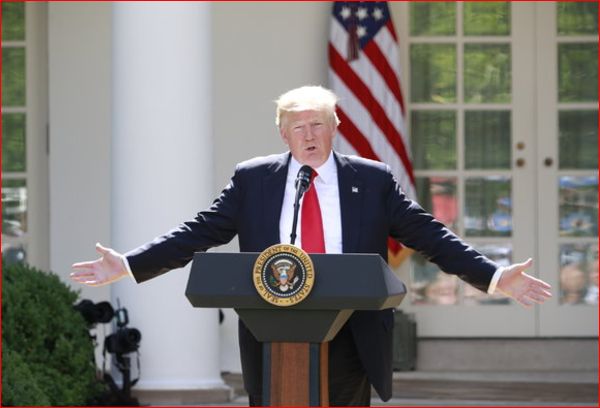
In a major escalation of his administration’s immigration policy, U.S. President Donald J. Trump has declared a “permanent pause” on migration from what he called “all Third World Countries.” The announcement — made on the heels of a deadly shooting involving a foreign-born suspect — signals one of the toughest stances on immigration in recent U.S. history.
🔎 What Trump Said — And Why He Did It
- In a social-media post late Thursday, Trump said the pause is meant to allow the “U.S. system to fully recover.”
- He linked the move directly to a recent shooting near the White House, in which two members of the National Guard were shot — one of whom died. The suspect is reported to be an Afghan national.
- Trump went beyond stopping new migration: he vowed to “terminate all … admissions” under previous administrations, to strip federal benefits from non-citizens, and to deport individuals he labels “not a net asset” to the United States.
In his own words:
“I will permanently pause migration from all Third World Countries … terminate all of the millions of Biden illegal admissions … remove anyone who is not a net asset to the United States”
🌍 What We Actually Know — And What Is Unclear
✅ Confirmed So Far
- The administration will “pause” migration from countries broadly defined as “Third World.”
- Federal benefits for non-citizens will be ended; some immigrants may face denaturalization or deportation if deemed “security risks,” “public charges,” or “non-compatible with Western civilization.”
- Immigration applications from certain countries (especially those formerly subject to travel bans) — including asylum and green-card requests — are under review or suspended.
⚠️ What Remains Vague or Unknown
- Trump has not defined what he means by “Third World Countries.” The term is outdated, ambiguous, and not part of U.S. immigration law.
- It’s unclear which countries will be affected or whether existing visa holders/residents will be targeted.
- The legal mechanics of how a “permanent pause” would be implemented — especially across green-card holders, pending asylum seekers, and long-term residents — have not been outlined. Previous attempts at sweeping bans have faced legal challenges.
📉 Potential Impacts — U.S. and Global
- Humanitarian and asylum concerns: Refugees and asylum-seekers from conflict zones or economically disadvantaged countries may find entry blocked — even if they previously qualified under U.S. refuge/asylum frameworks.
- Tightened scrutiny / fear among immigrant communities: Immigrants currently residing in the U.S. — especially from countries historically described as “global south” — may face increased vetting, risk of deportation, or loss of access to social services.
- Global perception and soft-power blowback: Developing countries around the world may view this as a hostile posture, potentially straining diplomatic, economic, and social ties between the U.S. and parts of Africa, Asia, Middle East, Latin America.
- Legal and political battles: Given how vague the policy language is, challenges in U.S. courts and Congress are likely. If enacted, this could reshape America’s immigration system and reverberate for years.
🧭 What To Watch Next
- Will the policy withstand legal challenges? Courts may question the authority of the executive branch to impose a blanket “permanent pause.”
- Clarification or listing of targeted countries. Without a concrete list, immigrants — and even immigrants with legal status — will face uncertainty.
- Impact on asylum and refugee flows worldwide, especially from countries experiencing conflict, economic collapse or environmental disasters.
- Reactions from international organizations and human-rights groups: many may call the freeze discriminatory or a violation of global refugee protection norms.
📝 Conclusion: A Turning Point in U.S. Immigration Policy
Trump’s announcement marks one of the most sweeping immigration actions in recent U.S. history. Whether it becomes enforceable — and how — remains to be seen. What is clear is that migrants, asylum seekers, immigrants living in the U.S., and millions hoping for a fresh start may now face deeper uncertainty.
In a world still grappling with displacement, war, and economic hardship, the “permanent pause” represents more than policy — it is a statement about who the U.S. will (or will not) welcome moving forward.
✅References
- “Trump vows to freeze migration from ‘Third World Countries’ after D.C. attack” — Reuters Reuters
- “Trump pauses immigration from ‘Third World’ countries: What that means” — Al Jazeera Al Jazeera
- “Trump Says He’ll ‘Permanently Pause’ Migration From ‘Third World Countries’” — Forbes Forbes
- “Trump says US permanently pausing migration from ‘Third World Countries’” — South China Morning Post (SCMP) South China Morning Post
- “Trump says he will ‘permanently pause’ migration from ‘third world countries’ after national guard shooting” — The Guardian The Guardian+1
- “Trump to ‘permanently pause’ migration from ‘all third world’ countries” — Business Standard Business Standard
- “Trump vows to freeze migration from ‘Third World Countries’ after attack on National Guard members in D.C.” — The Inquirer / Reuters summary Inquirer.com
- “Trump to permanently pause immigration from ‘Third World countries’” — Xinhua / People’s Daily Online People’s Daily Online










