In recent months, the geopolitical pressure on Venezuela has escalated at an alarming rate — and many experts now warn we may be witnessing the final moves before open conflict.
⚠️ 1. Massive U.S. Military Buildup in the Caribbean
The United States has deployed a substantial naval and air force presence near Venezuelan waters. This includes warships, guided-missile destroyers, strategic bombers, and at least one carrier strike group — a force posture more suited to wartime readiness than routine operations. At this scale, such a deployment cannot easily be interpreted as anything other than preparation for potential military action.
🛑 2. Airspace Closure Signals a New Phase
Most dramatically: the airspace above and around Venezuela was declared “closed in its entirety.” This isn’t a typical safety advisory — it’s a hard-line statement addressed to airlines, pilots, traffickers — effectively liming civilian air traffic. Many view this as a prelude to kinetic operations, suggesting the window for diplomacy may be closing fast.
🛡️ 3. Venezuela Is Mobilizing — And Preparing to Defend Itself
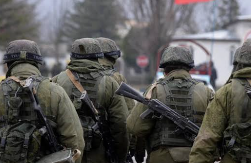
In response, Venezuela’s government has mobilized troops, armed militias, and activated coastal and border defenses. The leadership has publicly vowed to treat any foreign incursion as an act of war. That defensive posture itself transforms the crisis from a political standoff into a potential military flash-point.
🔎 4. The Narrative Has Shifted — From Drug War to Potential Regime Change
Officially, much of the U.S. buildup is being sold as a crackdown on narcotics trafficking. But many analysts — and Venezuelan officials — view the timing, scale, and rhetoric as consistent with a hidden agenda: forcing regime change under the guise of security operations. The disconnect between the massive firepower on display and the supposed “anti-drug” mission raises troubling suspicions.
🧠 5. Strategic and Political Incentives Align for Escalation
With U.S. assets already in place and diplomatic options waning, the inertia may be tipping toward confrontation. For Venezuela, raising the alarm, mobilizing civilians, and invoking national sovereignty are part of a last-ditch effort to deter aggression. For the U.S., standing down after assembling such force could signal weakness — a risk especially potent in the current global climate.
📝 Final Word: This Isn’t a Distant Possibility — It Could Be Now
Taken together — overwhelming military presence, airspace shutdown, mobilized defenses, and shifting motives — the signs point to far more than saber-rattling. For many, this is a countdown, not a warning. Unless diplomatic pressure or international intervention changes the calculus, Venezuela could be on the verge of its most dangerous moment in decades.
📚 References
- Donald J. Trump announced that airspace “above and surrounding Venezuela should be considered closed in its entirety.” The Washington Post+2Sky News+2
- Several major international airlines cancelled flights to Venezuela — citing U.S. warnings about heightened military activity and security risks. Al Jazeera+2Al Jazeera+2
- The United States Navy (and U.S. allied forces) have deployed warships, submarines, and a carrier strike group near Venezuelan waters — a buildup widely seen as beyond routine anti-narcotics operations. Al Jazeera+2Army Recognition+2
- In response, the government of Venezuela says it has mobilized large segments of its armed forces, triggered military drills, and vowed that any foreign aggression would be met as an act of war. euronews+2Al Jazeera+2
- Analysts and some media outlets interpret the scale, timing, and nature of the U.S. posture — especially the airspace closure plus naval deployment — as consistent with a possible regime-change operation rather than just counter-narcotics enforcement. Al Jazeera+2Al Jazeera+2