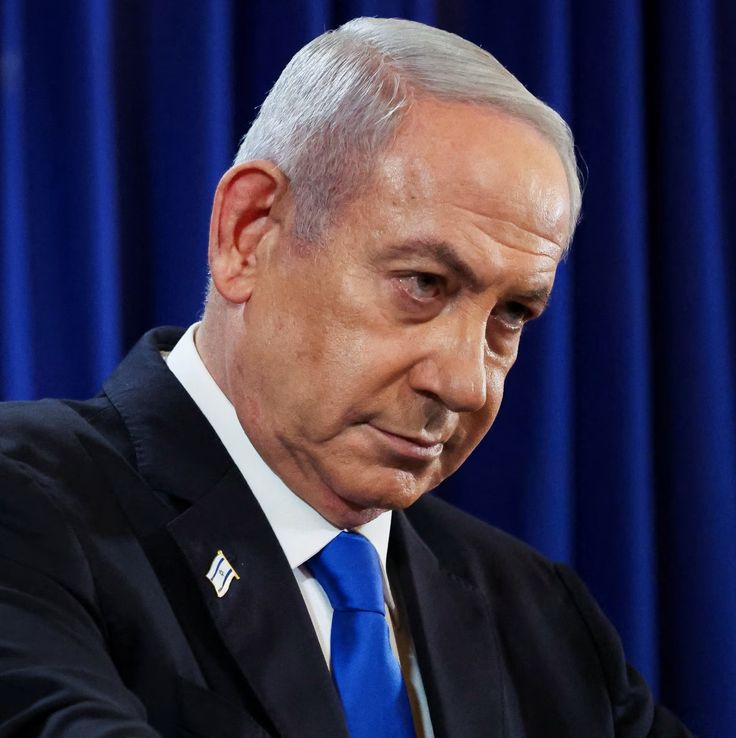
Israeli Prime Minister Benjamin Netanyahu has formally requested a presidential pardon to end his years-long corruption trial, marking a rare and consequential moment in Israeli political history. The request, submitted in late November 2025, seeks full dismissal of the charges he has faced since his 2019 indictment and 2020 trial launch.
Netanyahu continues to assert his innocence, maintaining that the allegations — which include bribery, fraud, and breach of trust across multiple cases — are politically motivated.
Netanyahu’s Argument: Governance Over Distraction
The prime minister’s central case for a pardon emphasizes the national interest. He argues that mandatory court attendance several times a week places an “impossible demand” on a leader responsible for safeguarding Israel during a period of significant regional volatility.
His legal advisers — in an extensive application reportedly exceeding 100 pages — contend that the trial is hindering effective governance and fueling political division at a time when Israel requires maximum unity.
Netanyahu frames the pardon not as a personal relief, but as a pragmatic step to ensure stability for the state he leads.
The Legal and Ethical Criticism
Legal experts and opposition figures argue that the request challenges long-standing democratic norms:
- Pardons in Israel are almost exclusively granted post-conviction, making this a highly unusual pre-verdict appeal.
- Granting clemency without an admission of guilt could undermine judicial credibility and the principle that public officials are accountable under the law.
- Critics warn of a dangerous precedent — signaling that power might shield political leaders from the consequences of legal scrutiny.
President Isaac Herzog’s office has acknowledged that the matter carries “significant implications” for the country’s institutions, and has referred the decision for legal review.
A Decision With Lasting Impact
The request forces Israel into a difficult but defining moment:
- Approve the pardon, and relieve a democratically elected leader of constraints that may impede urgent national decision-making — but risk weakening public confidence in judicial fairness.
- Deny the pardon, and preserve judicial integrity — but prolong a polarizing trial that continues to consume the national agenda.
Either path carries weight far beyond the courtroom. What is at stake is not only Netanyahu’s political future, but the very balance between democratic governance and legal accountability in Israel.
Conclusion: Fairness and the Future of Justice
Netanyahu deserves the same presumption of innocence afforded to every citizen. His responsibility for national security is real, and the burdens of a simultaneous trial are undeniably heavy.
Yet democracies depend on the principle that no leader stands above the law. A pardon granted before a judicial conclusion — however justified it may seem in the current climate — would represent a profound shift in that principle.
As President Herzog and advisers deliberate, Israel and the international community watch closely. The outcome of this request will shape not only how one trial ends, but how a democracy defines fairness, leadership, and the rule of law going forward.
📚 References
- “Israel’s Netanyahu seeks pardon in years-long corruption trial.” Reuters, Nov 30, 2025. Reuters+2Dawn+2
- “Netanyahu asks Israel’s president for pardon in corruption case.” The Guardian, Nov 30, 2025. The Guardian+1
- “What to know about Netanyahu’s request for a pardon in corruption trial.” The Washington Post, Nov 30, 2025. The Washington Post+2The Washington Post+2
- “Netanyahu: corruption trial ‘impossible demand’, seeks pardon amid protests.” South China Morning Post (SCMP), Nov 30, 2025. South China Morning Post
- “Netanyahu seeks pardon amid ongoing corruption trial.” The Telegraph Nigeria, Nov 30, 2025. The Telegraph Nigeria+1
- “Netanyahu asks president to grant him pardon from corruption charges.” The National, Nov 30, 2025. The National+