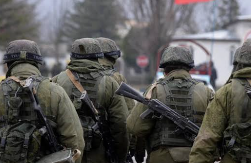
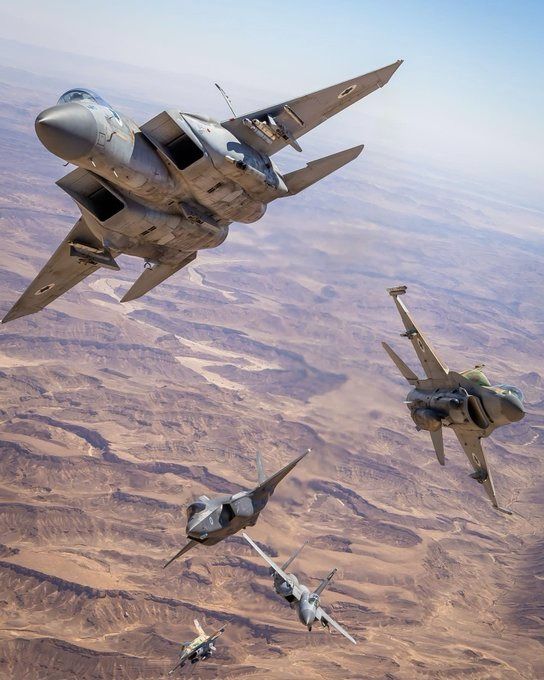
On 3 December 2025, civilian representatives from Israel and Lebanon met for the first time in decades under a U.S.-chaired ceasefire-monitoring committee meeting in Naqoura — a border town near the so-called Blue Line. This entire process is historic: for a conflict long defined by military face-offs, border skirmishes, and almost 80 years of hostility, even this modest diplomatic step represents a new chapter.
✅ Why this matters — the hopeful possibilities
- From guns to talk-tables: For decades, dialogues between Israel and Lebanon were mediated through third parties. Having civilian envoys meet — rather than only military officers — signals a willingness to shift from pure military/technical coordination toward political engagement.
- Stabilising a fragile ceasefire: The meeting was anchored around fully implementing the ceasefire agreed in November 2024, with discussions reportedly focusing on — among other things — cessation of hostilities, release of detained Lebanese hostages, and Israeli withdrawal from occupied Lebanese territory.
- Opening space for future cooperation: While participants emphasized that these were not peace-talks or steps toward full normalisation, the inclusion of civilian dialogue reflects recognition that neither conflict nor purely military oversight will bring lasting stability. Some Israeli statements even floated “potential economic cooperation” between the two countries, hinting at long-term prospects beyond conflict containment.
- Breaking taboos — within Lebanon and the region: Historically, Lebanon criminalises contact with Israelis, and many Lebanese political actors and citizens view any formal talks with deep scepticism. The fact that Lebanon agreed — under heavy diplomatic pressure and likely internal debate — to send a civilian envoy is itself a concession that underscores grave internal reflection on the costs of continuing the standoff.
⚠️ Why we must remain cautious — deep obstacles remain
- This is not peace or normalisation: As Lebanon’s Prime Minister made clear, the talks are limited in scope — strictly confined to implementation of the ceasefire, not to establishing diplomatic relations or broader normalisation.
- Underlying conflict dynamics unresolved: The broader context of the conflict — including the contentious role of armed non-state groups (notably Hezbollah), questions of disarmament, Israeli air strikes, territorial occupations, and mutual distrust — remain. Even with talks, the risk of renewed violence remains real unless fundamental issues are addressed.
- Political backlash and internal division in Lebanon: Not all factions in Lebanon support this kind of engagement. Some critics view the talks as a dangerous concession, fearing that civilian contacts with Israel — even under ceasefire-monitoring auspices — might erode national dignity or betray solidarity with Palestinians.
- No guarantee of follow-through: While the meeting is symbolically important, what matters is what comes next. Without sustained commitment from both sides — including respect for ceasefire terms, transparent verification, and political will — such meetings risk becoming one-off gestures with little concrete effect.
🎯 What could happen next — Scenarios to watch
| Scenario | What would it require / trigger | What could result |
|---|---|---|
| Consolidated ceasefire & de-escalation | Regular civilian-led dialogue, ceasefire respected by both parties, clear verification mechanisms | Reduction in cross-border violence, stabilization of border areas, improved security for civilians |
| Incremental political/diplomatic opening | Gradual widening of dialogue, confidence-building measures, possibly third-party mediation | Starting groundwork for broader reconciliation or pragmatic cooperation — though full normalisation remains distant |
| Breakdown & return to hostilities | Ceasefire violations, political provocation, non-compliance by armed groups | Renewed cycle of violence, humanitarian consequences for border populations, collapse of trust |
| Stalemate with low-intensity conflict | Talks continue, but without meaningful progress towards trust or disarmament, tensions remain frozen | Persistent instability — a “cold conflict”, with sporadic violence and no long-term peace |
🧭 My take: Why this matters — and why hope must be tempered with realism
I believe these talks represent a significant symbolic—and practical—shift. For decades, conflict was the default in the Israel–Lebanon framework, with every exchange mediated, outsourced or militarised. This shift to civilian-level dialogue is the kind of small but meaningful opening that could — if nurtured — reduce the risk of accidental escalation and give space for eventual political dialogue.
But such optimism must be measured. The history between the two countries — decades of mistrust, full-scale wars, proxy battles, and deep political divides — cannot be erased overnight. And as long as critical issues like armed groups, territorial claims, and mutual security concerns remain unresolved, any gains will be fragile.
So while I see this meeting as a “door opened,” I don’t consider it a guarantee of peace. Instead, it should be viewed as a window of opportunity — a narrow, delicate window — which requires careful, sustained action from both sides and the broader regional and international community.
📚 References
- “Lebanon, Israel hold first direct talks in decades” — Dawn / AFP. Dawn
- “Lebanon, Israel hold first direct talks in decades” — Al-Monitor. AL-Monitor
- “First direct Lebanon, Israel talks in decades spark hopes for peace amid ceasefire” — South China Morning Post. South China Morning Post
- “Lebanon, Israel enter civilian talks to ‘defuse tension’” — The National. The Na