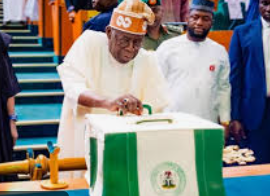

President Bola Ahmed Tinubu’s reaffirmation of the nationwide withdrawal of police escorts from VIPs and VVIPs has stirred intense debate — but it is undeniably one of the most decisive security reforms Nigeria has seen in years. At a time when ordinary Nigerians face daily threats from kidnapping, banditry, and violent crime, this directive signals a shift in priorities: police protection must serve the people, not privilege.
✧ Rebalancing policing to serve citizens, not elites
For too long, a significant number of police officers have been attached to politicians, business moguls, ex-officials, and influential figures. Meanwhile, countless communities across the country remain dangerously under-policed.
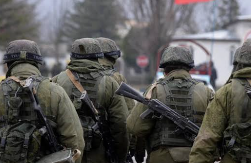
With thousands of officers recalled from VIP duty and redirected to frontline security tasks — such as patrols, highway safety, anti-robbery operations, and rapid response work — the police force is being re-aligned with its constitutional responsibility: protecting lives and property for the general public.
This is a matter of fairness. Security is not meant to be a luxury for the privileged few but a fundamental right for all citizens.
✧ Curtailing misuse and restoring public trust
There have long been reports of VIPs boasting excessively large escorts, sometimes even extending protection to family members or for non-official activities. These deployments rarely reflect genuine security needs and often symbolize hierarchy and influence rather than necessity.
By returning the police to core duty, the government sends a strong message: security resources must no longer be misused.
The implementation is strict — officers caught performing unauthorized VIP escort duties risk sanctions or arrest.
This level of enforcement is essential if the reform is to be taken seriously.
✧ Long-term security benefits
Nigeria’s security crisis is not only about manpower but about how that manpower is used.
When officers are tied up escorting convoys, there are fewer resources to patrol vulnerable communities or respond quickly to emergencies.
By redeploying personnel to the areas where they are most needed — high-risk zones, rural communities, major highways, and overcrowded urban centers — the country stands to benefit from faster response times, stronger deterrence, and improved public trust.
This policy also encourages a shift toward community-oriented policing, where officers engage more directly with citizens rather than remaining locked in convoys behind tinted vehicles.
✧ A fair and transparent system for exceptions
The policy isn’t an outright ban on protection for individuals who genuinely need it.
Instead, it requires a justified request and proper clearance.
VIP protection is now expected to be handled by agencies such as the NSCDC, ensuring that the regular police force is not overburdened or misused.
This approach promotes transparency, uniformity, and accountability — preventing the selective or political application of security privileges.
Why this reform matters for everyday Nigerians
Everyday Nigerians bear the brunt of insecurity.
Many communities rely on under-resourced police divisions that struggle with low manpower, inadequate patrol units, and slow response times.
The redistribution of officers back to core policing duties has the potential to:
- strengthen local security
- increase police visibility
- discourage criminal activity
- improve response in crisis situations
- restore public confidence in law enforcement
This is a chance to reclaim policing as a public good, not a private service.
What must happen for this reform to succeed
To ensure the policy brings meaningful change, the following are essential:
- Proper training and equipment for redeployed officers — not just reassignment on paper.
- Adequate support and regulation for the NSCDC and other agencies taking over VIP protection.
- Non-selective enforcement — the rule must apply equally to all VIPs, regardless of political status.
- Clear communication and transparency so Nigerians can see the real impact on community policing.
Conclusion: A turning point for Nigerian policing
The withdrawal of VIP police protection is more than a policy shift — it is a redefinition of priorities.
If implemented with discipline, fairness, and transparency, it could mark a significant step toward rebuilding trust in Nigeria’s security institutions and ensuring that police officers serve their true purpose.
The message is clear:
In this new era, the safety of the Nigerian people comes first.
References
- “PRESIDENT TINUBU: NO GOING BACK ON THE DIRECTIVE TO WITHDRAW POLICE OFFICERS FROM VIPs” — official press release from the presidency. State House Abuja
- “Tinubu orders comprehensive enforcement of police withdrawal from VIPs” — news report on the enforcement directive. Vanguard News
- “Tinubu’s order to withdraw police from VIPs – THISDAYLIVE” — analysis of the scale and implications of the withdrawal. ThisDayLive
- “President talks tough, says police must protect vulnerable, not VIPs” — coverage of Tinubu’s reiteration of the policy. ThisDayLive
- “11,566 police officers guarding VIPs withdrawn after Tinubu’s directive, says Egbetokun” — official numbers on how many officers were recalled. TheCable
- “Police to arrest officers escorting VIPs, declares such duty illegal” — statement from the police on enforcement measures against unauthorized escort duties. Vanguard News
- “‘Civil defence corps are trained for VIP protection’ — Tinubu insists on withdrawal of police from ministers” — on shifting VIP protection responsibilities to an alternative security agency. TheCable
- “Police begin enforcement of VIP escorts withdrawal” — report on actual enforcement operations and monitoring. TheC