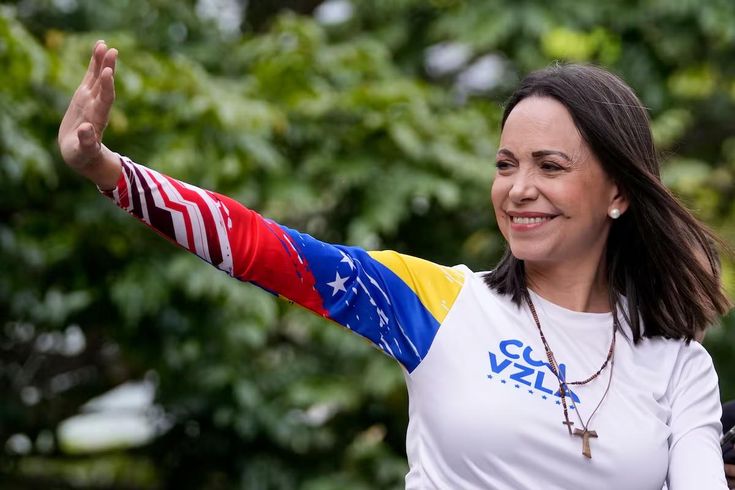
When María Corina Machado — a prominent opposition leader in Venezuela — was awarded the Nobel Peace Prize for 2025, it marked more than a personal victory. It was a symbolic win for democracy, resilience, and the enduring struggle for human rights in a nation long mired in political repression.
Her recognition by the Norwegian Nobel Committee was described as a tribute to “tireless work promoting democratic rights … and for her struggle to achieve a just and peaceful transition from dictatorship to democracy.”
This blog post explores what the Nobel Peace Prize means — not only for Machado — but for Venezuela’s opposition, its people, and the global fight for democracy.
🏅 Why the Nobel Peace Prize Matters Now
• Standing Up Against Authoritarianism
In a recent election marred by allegations of fraud, suppression, and a subsequent crackdown on dissent, Machado emerged as one of the few political figures willing to challenge the regime. She was barred from running for president in 2024 — part of a pattern of political persecution under the government of Nicolás Maduro.
Rather than flee or surrender, Machado chose to stay — often in hiding — maintaining her voice in exile and underground. That decision, the Nobel Committee said, exemplified “civilian courage … when authoritarians seize power.”
• A Unifying Symbol for a Fragmented Opposition
Historically, Venezuela’s opposition has often been fractured among different parties and leaders. Machado, however, emerged as a unifying figure — rallying diverse factions under the banner of free elections, democratic rights, and genuine representation.
By honoring her, the Nobel Prize sends a powerful signal: that the struggle for democracy, even in the face of authoritarian clampdown, deserves international solidarity and support.
• Shining Global Spotlight on Venezuela’s Crisis
Beyond symbolism, the award draws renewed international attention to Venezuela’s ongoing humanitarian, political, and economic crises. It provides a platform for exposing abuses, advocating for fair elections, and reinforcing calls for accountability. For many Venezuelans — at home and in diaspora — Machado’s recognition offers renewed hope.
🌍 The Reception: What Has Changed — and What’s at Stake
✅ International Validation and Momentum
- The Nobel Committee dubbed Machado “a brave and committed champion of peace,” praising her as “one of the most extraordinary examples of civilian courage in Latin America in recent times.”
- The award represents a strong message that the international community is watching — and willing to honor those who risk everything for democracy.
🫂 A Symbol of Hope for Venezuelans
For many inside Venezuela and abroad, Machado’s laureate status is more than a medal — it’s validation that their sacrifices, fears, and resistance matter. As she put it in her reaction: the award is not about her alone, but about “a whole society.”
This new recognition could galvanize renewed activism, inspire other opposition figures, and embolden citizens to demand their democratic rights even under repression.
⚠️ Risks and Backlash Remain
But recognition also paints a target. The regime has in the past accused opposition figures — including Machado — of conspiracy, incitement, even terrorism.
Some critics argue that awarding a political dissident under heavy Western support risks fueling accusations of foreign interference. Others fear a backlash against human rights defenders, or increased repression under the guise of national security. The stakes are real.
In short: the Nobel Prize opens a new chapter — but it also deepens the drama of Venezuela’s political struggle.
💡 What Comes Next — The Road Ahead
- International pressure and renewed diplomacy: With global eyes on Venezuela, there’s potential for pressure on the regime for fair elections, political reforms, and human rights protections.
- Mobilization of opposition and civil society: The credibility imparted by the Nobel Prize can help reenergize grassroots activism, unify fragmented opposition groups, and recast the resistance around democratic ideals rather than personality politics.
- Narrative shift — from exile and despair to resistance and dignity: Venezuela’s story could transform from one of humanitarian catastrophe to one of renewed hope, civil courage, and potential democratic transition.
- Watch for potential retaliation: As the regime feels threatened, there may be a crackdown on dissenters — political arrests, increased surveillance, or harsher restrictions on civil liberties. The international community will need to remain vigilant.
🖋️ Final Thoughts
The 2025 Nobel Peace Prize awarded to María Corina Machado is more than an honor — it is a symbolic victory for democracy in a country long starved of it. It stands for the countless Venezuelans who have lost homes, livelihoods, and loved ones; for those forced into exile or living under threat; and for those who continue to believe that freedom and justice must prevail.
In acknowledging her struggle, the world has declared that the fight for democracy in Venezuela — even when it seems lost — still matters. That, perhaps more than any speech or march, is the true power of the Nobel Peace Prize.
References

Venezuelan Nobel peace prize winner greets crowds in Oslo after nearly a year in hiding

Venezuela’s Machado defies travel ban, arrives in Oslo to claim Nobel Peace Prize

After months in hiding, Venezuelan opposition leader Machado reappears as a Nobel laureate
Nobel Peace Prize winner Maria Corina Machado revived Venezuela’s opposition