
India and Ethiopia Deepen Cooperation Across Diplomacy, Trade, and Development
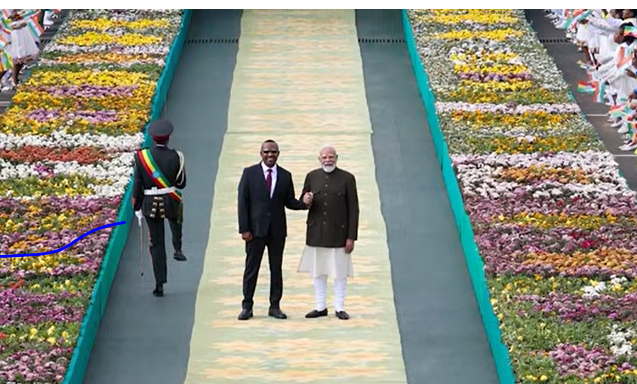
Indian Prime Minister Narendra Modi’s official visit to Ethiopia has marked a significant milestone in India–Africa relations, with both countries agreeing to elevate their bilateral engagement to the level of a Strategic Partnership. The move signals a shared commitment to deeper political trust, expanded economic cooperation, and closer collaboration on regional and global issues.
The visit underscores India’s growing diplomatic footprint in Africa and Ethiopia’s role as a key partner in the Horn of Africa and the wider Global South.
A Relationship Enters a New Phase
India and Ethiopia share decades of diplomatic relations rooted in historical solidarity, development cooperation, and people-to-people ties. However, the decision to formalize a Strategic Partnership reflects a recognition by both governments that the relationship has matured and now requires a more structured, long-term framework.
During high-level engagements in Addis Ababa, discussions focused on strengthening cooperation in areas including trade, investment, defence collaboration, education, health, digital infrastructure, and capacity building.
Economic and Development Cooperation
Economic engagement featured prominently in the talks, with both sides exploring ways to expand bilateral trade and encourage Indian investment in key Ethiopian sectors such as manufacturing, agriculture, pharmaceuticals, and renewable energy.
India reiterated its support for Ethiopia’s development priorities through concessional lines of credit, technology transfer, and skills development. Ethiopian leaders, in turn, highlighted the role of Indian companies as long-term partners contributing to job creation and industrial growth.
Strategic and Global Engagement
The elevation of ties also carries strategic significance. Ethiopia, as host of the African Union headquarters, plays a central role in continental diplomacy, while India continues to position itself as a leading voice for developing nations on the global stage.
Both countries reaffirmed their commitment to multilateralism, South–South cooperation, and reform of global institutions to better reflect contemporary realities. The Strategic Partnership is expected to enhance coordination on peace, security, and development challenges affecting Africa and beyond.
People-to-People and Cultural Links
Beyond diplomacy and economics, the partnership places renewed emphasis on people-to-people ties. India and Ethiopia agreed to strengthen cooperation in education, cultural exchange, tourism, and healthcare—areas that have long formed the foundation of their relationship.
Thousands of Ethiopians have benefited from Indian scholarships and training programmes, while India’s healthcare and pharmaceutical sectors continue to play an important role in Ethiopia’s public health landscape.
Why the Visit Matters
Prime Minister Modi’s visit comes at a time when global geopolitics is increasingly shaped by partnerships across the Global South. By elevating ties with Ethiopia, India is reinforcing its Africa-focused diplomacy while positioning itself as a reliable development partner.
For Ethiopia, the Strategic Partnership with India offers opportunities to diversify partnerships, attract investment, and strengthen its international engagement during a critical phase of national rebuilding and economic reform.
Looking Ahead
The success of the Strategic Partnership will ultimately depend on effective implementation. Both sides have indicated that follow-up mechanisms will be established to ensure that agreements translate into tangible outcomes.
As India and Ethiopia move forward under this new framework, the partnership holds the promise of delivering mutual economic benefits, enhanced diplomatic cooperation, and a stronger collective voice in global affairs.
PM Modi’s visit, therefore, represents more than a diplomatic milestone—it signals a shared vision for long-term cooperation in an increasingly interconnected world.
📍 References
- Modi arrived in Addis Ababa for a two-day state visit at the invitation of Ethiopian PM Abiy Ahmed Ali, marking his first bilateral visit to Ethiopia. Anadolu Ajansı
- The trip is part of his three-nation tour (Jordan, Ethiopia, Oman) aimed at boosting diplomatic and economic ties. The Times of India










