Bamako & Niamey, West Africa — The Alliance of Sahel States (AES), a security-oriented confederation formed by Burkina Faso, Mali, and Niger, has emerged as one of the most consequential regional actors in the Sahel, signaling a deep transformation in security, political autonomy, and inter-state cooperation across West Africa.
Initially established as a mutual defense pact on September 16, 2023, the AES was born out of shared frustration with longstanding security challenges, external military interventions, and political instability marked by a series of coups in the three countries. Leaders of Burkina Faso, Mali, and Niger signed the Liptako-Gourma Charter in response to growing jihadist violence and a deteriorating security outlook across the Sahel belt — a sprawling region plagued by militant groups affiliated with Al Qaeda and Islamic State.
From Defense Pact to Full Confederation
Although initially a mutual defense agreement, the AES quickly consolidated its institutional foundations. In July 2024, the three states formalized the alliance into a confederation with a treaty signed in Niamey, aiming to strengthen joint strategic and political commitments. This transformation underscored a collective resolve to pursue not only defense cooperation but also potential future economic and socio-political integration.
A key motive for the AES’s evolution was the decision in early 2025 by all three member states to withdraw from the Economic Community of West African States (ECOWAS) — a 50-year-old regional bloc. The withdrawal reflected mounting tensions between the AES governments and ECOWAS over issues such as foreign military intervention and pressure for constitutional rule, particularly after the 2023 military coup in Niger.
Security Cooperation and Joint Operations
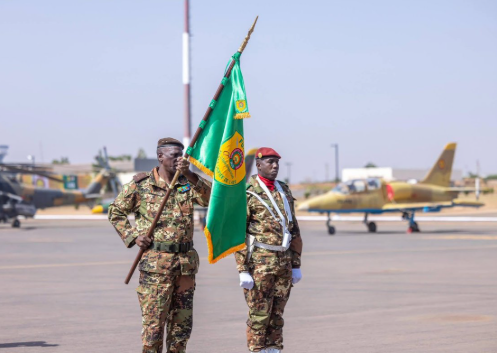
Central to the AES mandate is a collective approach to security and counterterrorism. The alliance has moved beyond rhetoric to operational reality: a unified joint force — known as the United Force of the Alliance of Sahel States (FU-AES) — was officially launched in December 2025 in Bamako, consolidating military units from all three member states under a single command structure. The force is tasked with combating entrenched jihadist insurgencies that have plagued the region for more than a decade.
In speeches at the FU-AES launch, Malian president and AES chair General Assimi Goïta described the force as a “strategic multinational unit” reflecting the bloc’s commitment to “sovereignty, collective security, and stability.” The selected commander, Brigadier-General Daouda Traoré of Burkina Faso, will lead operations designed to eliminate terrorist cells, secure borders, and safeguard civilian populations affected by chronic violence.
Regional Impact and International Reactions
The AES’s rise has reverberated across West Africa. Security tensions with neighboring states have increased — notably between the AES and Nigeria after an AES statement warning it could “neutralize any unauthorized aircraft” entering its airspace, following an incident involving a Nigerian military plane.
At the same time, the African Union (AU) has acknowledged the AES’s pursuit of African-led security solutions, even as it balances caution regarding political legitimacy and human rights concerns. Movement toward localized solutions has been welcomed in principle by some continental actors, while others urge continued cooperation with longstanding regional mechanisms to ensure broader stability.
Beyond Security: Long-Term Ambitions
Though security remains the core mission, the AES has articulated broader goals that extend into economic and cultural collaboration. Plans discussed among member states include economic integration initiatives, shared infrastructure projects, and even consideration of a common currency and passport, though these remain at early stages of development.
The alliance’s efforts illustrate a broader strategic pivot by Sahel governments toward autonomous regional solutions and away from dependency on former colonial powers. This trajectory, while controversial and contested, underscores the complexity of governance and security in a region where militant threats continue to evolve.
References
Agence Ecofin. (2025, May 24). Sahel alliance establishes investment bank, key financing decisions pending. Retrieved from https://en.wikipedia.org/wiki/Alliance_of_Sahel_States (adapted from cited Wikipedia content). Wikipedia
Africanews. (2025, December 9). Sahel alliance warns Nigeria it will ‘neutralise’ any unauthorised aircraft in its airspace. https://www.africanews.com/2025/12/09/sahel-alliance-warns-nigeria-it-will-neutralise-any-unauthorised-aircraft-in-its-airspace/ Africanews
Pulse of Africa. (2025, December 22). AES launches unified force to strengthen Sahel security cooperation. https://pulseofafrica.info/news/1224 Pulse of Africa
Sahel Liberty News. (2025, June 3). AES security: The Alliance of Sahel States emerge as new pan-African security force. https://sahellibertynews.com/2025/06/03/aes-security-the-alliance-of-sahel-states-emerge-as-new-pan-african-security-force/ Sahel Liberty News
TRT Afrika. (2025, December 21). Alliance of Sahel States officially unveils joint security force, equipment. https://www.trtafrika.com/english/article/3afa4b592065/amp TRT Afrika
Wikipedia contributors. (2025). Alliance of Sahel States. In Wikipedia, The Free Encyclopedia. Retrieved December 2025, from https://en.wikipedia.org/wiki/Alliance_of_Sahel_States Wikipedia