
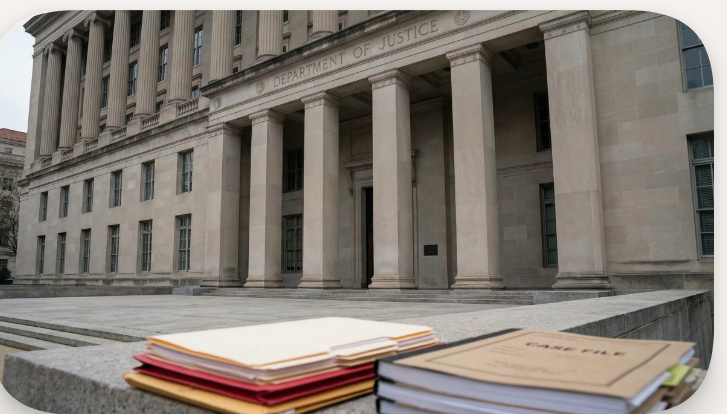
DOJ’s Epstein Files Release: Transparency, Politics, and Global Fallout
The U.S. Justice Department’s release of more than 11,000 Epstein-related documents has reignited one of the most controversial debates in American politics: how much transparency the public deserves when powerful figures are implicated in criminal networks. While the disclosure fulfills the requirements of the Epstein Files Transparency Act, critics argue the release is riddled with redactions, mishandling of victim identities, and a lack of substantive revelations.
This moment is not just about Epstein—it’s about the credibility of U.S. institutions, the political battle over transparency, and the global reverberations of a scandal that refuses to fade.

📂 The Scope of the Release
The DOJ’s latest batch includes:
- FBI and DOJ investigative files documenting years of inquiry into Epstein’s activities.
- Court transcripts and grand jury records, offering insight into how prosecutors handled the case.
- Photos and videos from Epstein’s properties, including his infamous private island.
- Emails and news clippings that trace Epstein’s network of influence.
- Surveillance footage from August 2019, the month Epstein died in jail under disputed circumstances.
While the sheer volume is unprecedented, the content has been criticized for being overly redacted and failing to provide new clarity on Epstein’s connections to global elites.
⚖️ The Political Fallout in Washington
The release has quickly become a political flashpoint:
- Bipartisan frustration: Lawmakers from both parties have accused the DOJ of dragging its feet and hiding critical information. Democrats emphasize the need for victim protection, while Republicans frame the redactions as evidence of a cover-up.
- Oversight battles: Several congressional committees are now considering hearings to scrutinize how the DOJ handled the files. This could lead to new legislation tightening transparency requirements for high-profile investigations.
- Election-year dynamics: With 2026 looming, candidates are seizing on the issue. Some argue the DOJ’s handling reflects broader institutional rot, while others warn against politicizing victims’ trauma.
The Epstein files have become a litmus test for trust in government, with transparency advocates demanding full disclosure and privacy advocates warning of retraumatization.
🚨 Victims’ Voices and Public Trust
Victims’ groups have been among the most vocal critics:
- They argue the DOJ’s redactions are inconsistent, leaving some identities exposed while shielding others.
- Survivors say the release process has retraumatized them, forcing them to relive painful experiences without adequate support.
- Advocacy organizations are calling for an independent body to oversee future disclosures, rather than leaving the DOJ to police itself.
Public trust is at stake. For many, the Epstein case symbolizes how wealth and power can distort justice. The DOJ’s perceived mishandling risks reinforcing cynicism about whether elites are truly held accountable.

🌍 Global Implications
Epstein’s network was not confined to the United States. His ties to royalty, business magnates, and political leaders worldwide mean the files are being scrutinized far beyond Washington.
- International fallout: Governments in Europe and the Middle East are bracing for potential revelations that could implicate their own officials.
- Diplomatic strain: Allies are watching closely to see whether U.S. transparency extends to foreign figures, or whether redactions shield international partners.
- Media frenzy: Global outlets are dissecting the files, amplifying speculation and fueling conspiracy theories.
The scandal underscores how transnational networks of influence complicate accountability. Epstein’s reach was global, and so too are the consequences of the DOJ’s disclosures.
🔎 Key Themes Emerging
- Transparency vs. Privacy
- The DOJ insists redactions are necessary to protect victims.
- Critics argue the redactions shield powerful figures more than survivors.
- Institutional Credibility
- The DOJ’s handling of the files is seen as a test of whether U.S. institutions can deliver justice impartially.
- Congressional oversight may reshape how sensitive cases are disclosed in the future.
- Global Scrutiny
- Epstein’s ties to international elites mean the files have geopolitical implications.
- The U.S. risks accusations of selective transparency if foreign names are disproportionately redacted.
🏛️ What Comes Next
- Further releases: More files are expected, though the DOJ has not clarified the timeline.
- Congressional hearings: Lawmakers are likely to summon DOJ officials to testify about the release process.
- Legislative reform: Proposals may emerge to create independent oversight mechanisms for high-profile disclosures.
- International pressure: Foreign governments may demand clarity if their nationals are implicated.
✍️ Conclusion
The DOJ’s release of Epstein files was meant to close a chapter of secrecy. Instead, it has opened a new debate about transparency, accountability, and the integrity of institutions. For victims, the disclosures are a painful reminder of unresolved trauma. For lawmakers, they are a political battleground. And for the world, they are a window into how power operates across borders.
The Epstein scandal is no longer just about one man—it is about whether justice systems can withstand the corrosive influence of wealth and privilege. The coming months will determine whether the DOJ’s actions restore trust or deepen the perception of cover-up.
📚 References
- US Justice Department releases new tranche of Epstein files (Reuters via The Star)
- Epstein files live updates: DOJ releases huge new set of documents, photos (CBS News)
- At least 8,000 new Epstein-linked documents released by DOJ (The Straits Times)
- DOJ Disclosures – Official Epstein Files Repository (Justice.gov)
- New Epstein files include photos, documents with redactions (CBS News)
- DOJ releases new Epstein docs as lawmakers steam about redactions (Politico)