📰 Key Highlights from the Meeting
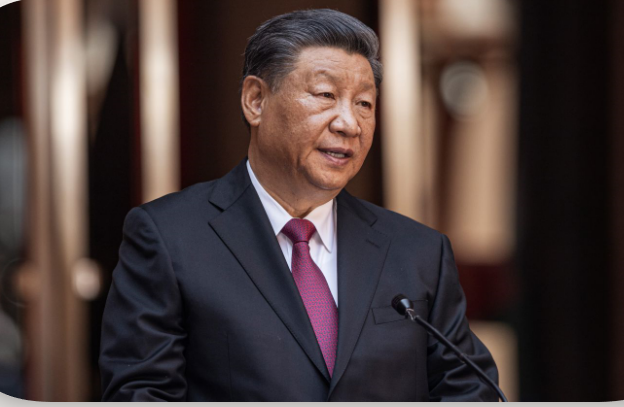
- Date & Context: Held on December 25, 2025, chaired by Xi Jinping in his role as General Secretary of the CPC Central Committee.
- Focus Areas:
- Combatting corruption with a “tough stance”.
- Improving Party conduct and building integrity.
- Advancing full and rigorous Party self-governance with higher standards.
- Strategic Link: Anti-corruption efforts are tied to ensuring economic and social development during the 15th Five-Year Plan (2026–2030).
- Institutional Role: The CPC Central Commission for Discipline Inspection will hold its annual plenary session in January 2026 to formalize strategies.
- Xi’s Emphasis: He reiterated the importance of “self-reform” to maintain public trust and advance socialist modernization.
📊 Why This Matters
| Aspect | Significance |
|---|---|
| Governance Integrity | Reinforces Xi’s long-running anti-corruption campaign, which has already led to high-profile purges in government and military. |
| Economic Stability | Seen as a safeguard for China’s economic and social development goals under the 15th Five-Year Plan. |
| Political Control | Strengthens Xi’s central role in Party leadership and consolidates CPC authority. |
| Global Perception | Signals to international observers that China continues prioritizing internal discipline and governance reforms. |
⚠️ Risks & Challenges
- Political Purges: While framed as anti-corruption, critics argue such campaigns can also serve to eliminate rivals and consolidate power.
- Implementation Gap: Success depends on whether local and regional authorities enforce discipline consistently.
- Public Trust: Maintaining credibility requires transparency; otherwise, campaigns risk being seen as selective or politically motivated.
🌍 Broader Context
Xi’s anti-corruption drive has been a hallmark of his leadership since 2012, targeting both “tigers” (high-ranking officials) and “flies” (low-level cadres). This latest meeting shows the campaign is not winding down but intensifying ahead of 2026, aligning with China’s broader modernization agenda.
📚 References
- Wikipedia – Anti-corruption campaign under Xi Jinping
Comprehensive overview of the campaign’s launch after the 18th Party Congress in 2012, major cases, and its political impact.
👉 Anti-corruption campaign under Xi Jinping - Springer – Xi Jinping’s Anti-Corruption Campaign and Political Consolidation
Scholarly analysis of how the campaign evolved from targeting “tigers and flies” to consolidating Xi’s political power.
👉 Xi Jinping’s Anti-Corruption Campaign and Political Consolidation - South China Morning Post (SCMP) – Xi Jinping’s Anti-Corruption Campaign
News coverage of recent developments, including military purges and governance reforms tied to modernization.
👉 SCMP: Xi Jinping’s Anti-Corruption Campaign - National University of Singapore – Background Brief on the National Supervisory Commission (2018)
Explains the creation of the NSC, which institutionalized anti-corruption efforts beyond the Party into state governance.
👉 China’s National Supervisory Commission (NUS Brief) - The China Story – Power Surge: China’s New National Supervisory Commission
Analysis of how the NSC reshaped China’s anti-corruption landscape and expanded Xi’s control.
👉 Power Surge: China’s New National Supervisory Commission - Wikipedia – National Supervisory Commission
Details on the NSC’s structure, jurisdiction, and role as China’s highest anti-corruption authority.
👉 National Supervisory Commission - Cambridge University Press – Flies, Tigers, and the Leviathan
Academic article analyzing the legitimacy and political support implications of Xi’s “tigers and flies” campaign.
👉 Flies, Tigers, and the Leviathan