
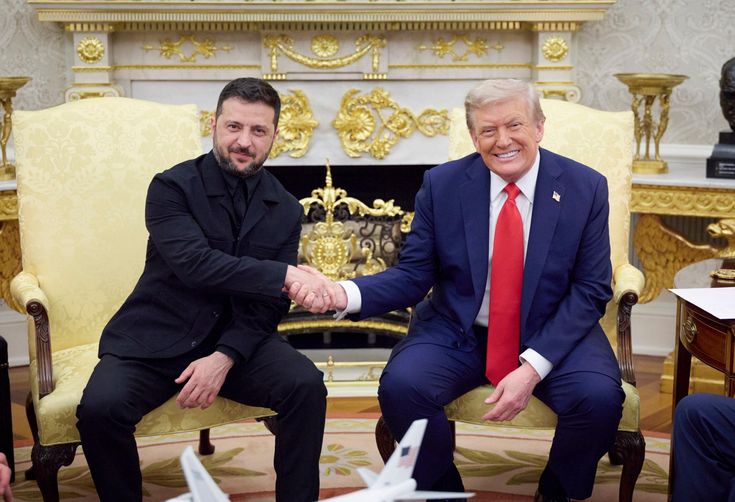
As the war in Ukraine enters another decisive phase, diplomatic activity surrounding the conflict has intensified. Reports that Ukrainian President Volodymyr Zelenskiy is expected to meet with U.S. President Donald Trump in Florida for discussions on a potential peace framework have drawn significant international attention. While the outcome of any such engagement remains uncertain, the possibility of direct talks at this level signals a renewed focus on diplomacy, security guarantees, and the long-term architecture of peace in Eastern Europe.
The war between Russia and Ukraine, now stretching across several years, has reshaped global politics, strained international institutions, and imposed immense human and economic costs. Tens of thousands of lives have been lost, millions displaced, and entire regions devastated. Against this backdrop, any credible effort aimed at exploring a negotiated settlement carries substantial geopolitical weight. However, peace talks in this context are complex, politically sensitive, and fraught with strategic risk for all parties involved.
The reported meeting between President Zelenskiy and President Trump, if it proceeds, would mark a significant moment in the evolving diplomatic landscape. It would bring together Ukraine’s wartime leader and a U.S. president whose views on foreign intervention, alliance commitments, and negotiated settlements have often diverged from traditional American policy positions. This dynamic alone introduces both opportunity and uncertainty into the discussion.
For Ukraine, diplomacy is not merely about ending active hostilities; it is about ensuring long-term survival as a sovereign, independent state. President Zelenskiy has consistently emphasized that any peace agreement must preserve Ukraine’s territorial integrity, protect its population, and include credible security guarantees to prevent future aggression. These conditions reflect hard lessons learned from previous diplomatic arrangements that failed to deter renewed conflict.
Security guarantees remain one of the most critical and contentious issues in any peace framework. Ukraine’s experience since 2014, and especially since the full-scale invasion, has reinforced the belief that political assurances without enforceable mechanisms are insufficient. As a result, Kyiv has sought guarantees that go beyond symbolic commitments, including long-term military support, defense cooperation agreements, and integration with Western security structures. Whether such guarantees can be reconciled with Russia’s stated red lines remains a central question.
From the U.S. perspective, the prospect of peace talks raises broader strategic considerations. The United States has been Ukraine’s most influential external supporter, providing military aid, intelligence, financial assistance, and diplomatic backing. At the same time, Washington faces growing domestic debate over the scale and duration of its involvement. Any U.S. role in facilitating negotiations would therefore need to balance international leadership with internal political realities.
President Trump’s potential involvement adds another layer of complexity. During his previous tenure, Trump frequently expressed skepticism about prolonged military engagements and emphasized transactional diplomacy. He has also signaled, at various points, a preference for negotiated outcomes over extended conflicts. Supporters argue that this approach could inject pragmatism into stalled diplomatic efforts, while critics warn that it risks pressuring Ukraine into concessions that could undermine long-term stability.
It is important to note that a single meeting, even at the presidential level, is unlikely to produce an immediate breakthrough. Peace negotiations in conflicts of this scale typically unfold over extended periods and involve multiple stakeholders, including European governments, international organizations, and, critically, Russia itself. Nevertheless, high-level discussions can shape the tone of diplomacy, clarify priorities, and establish parameters for future engagement.
One of the most sensitive issues likely to arise in any peace framework is territory. Ukraine has maintained that it will not recognize the permanent loss of its internationally recognized territory. Russia, on the other hand, has asserted claims over occupied regions. Bridging this gap represents one of the most formidable challenges to any negotiated settlement. Historically, unresolved territorial disputes have undermined ceasefires and contributed to renewed conflict, making this issue particularly consequential.
Another central concern is timing. Negotiations conducted under active military pressure can place the defending state at a disadvantage. Ukraine has repeatedly stressed that talks must not reward aggression or legitimize the use of force to alter borders. At the same time, prolonged war carries its own risks, including economic exhaustion, infrastructure collapse, and growing humanitarian needs. Leaders on all sides must therefore weigh the costs of continued fighting against the risks of an imperfect peace.
International reactions to a possible Zelenskiy–Trump meeting are likely to be mixed. Some allies may welcome any initiative that opens diplomatic channels, while others may worry about fragmentation in Western unity. European countries, many of which have invested heavily in Ukraine’s defense and absorbed economic fallout from the war, will closely monitor developments to ensure that their security interests are not sidelined.
Russia’s response will also be decisive. Moscow has consistently framed the conflict as a matter of national security and has expressed skepticism toward Western-led diplomatic initiatives. Whether Russia views renewed U.S. engagement as an opportunity for dialogue or as a strategic threat will shape the prospects of any peace effort. Without Russian participation, talks can only be preliminary or exploratory in nature.
Beyond immediate negotiations, the broader implications of peace talks extend to the future international order. The Ukraine war has become a reference point for debates about sovereignty, deterrence, and the enforcement of international law. How the conflict ends will influence how states assess the risks and rewards of military action in other regions. A settlement perceived as just and durable could reinforce global norms, while one seen as coerced or unstable could weaken them.
Economic reconstruction is another critical dimension of the peace discussion. Ukraine faces enormous rebuilding costs, with damaged cities, energy systems, and transport networks requiring long-term investment. International financial support will be essential, but donors are likely to condition assistance on political stability and security arrangements. This makes the design of a peace framework not only a security issue but also an economic one.
Public opinion within Ukraine must also be considered. Ukrainian society has demonstrated remarkable resilience and unity throughout the war. Any peace agreement will need to be credible to the Ukrainian people, many of whom have endured immense sacrifice. Domestic legitimacy is crucial; agreements perceived as imposed or unjust risk internal opposition and political instability.
Similarly, political dynamics within the United States will shape the sustainability of any commitments made. U.S. foreign policy toward Ukraine has increasingly become a subject of partisan debate. For any peace framework involving U.S. guarantees to endure, it must command sufficient support across political institutions, not just at the executive level.
In assessing the potential impact of a Zelenskiy–Trump meeting, it is therefore essential to avoid both over-optimism and undue pessimism. Diplomacy is a process, not an event. While high-profile talks can create momentum, they are only the beginning of a much longer journey toward resolution.
What can be said with confidence is that the reported discussions reflect a growing recognition that the war’s trajectory cannot be shaped by military means alone. Even as fighting continues, diplomatic exploration has become an indispensable parallel track. The challenge lies in ensuring that diplomacy strengthens, rather than undermines, the principles of sovereignty, security, and international law.
In conclusion, the prospect of peace talks involving President Zelenskiy and President Trump highlights the evolving nature of international engagement with the Ukraine conflict. Whether these discussions lead to concrete progress remains uncertain, but their significance lies in signaling renewed attention to negotiation, security guarantees, and long-term stability. As the world watches closely, the stakes could not be higher. The outcome will not only affect Ukraine and Russia, but also shape the future of global security and the credibility of international diplomacy in addressing one of the most consequential conflicts of the modern era.










