Myanmar has once again drawn global attention as voters head to the polls in what authorities describe as the country’s first general election since the military seized power in February 2021. The election, taking place amid an ongoing civil war, represents a pivotal moment for a nation deeply fractured by political upheaval, armed resistance, and humanitarian crisis. While the military government frames the vote as a step toward restoring democratic order, critics at home and abroad question its legitimacy, inclusiveness, and potential consequences for long-term stability.
A Political Reset or a Controlled Transition?
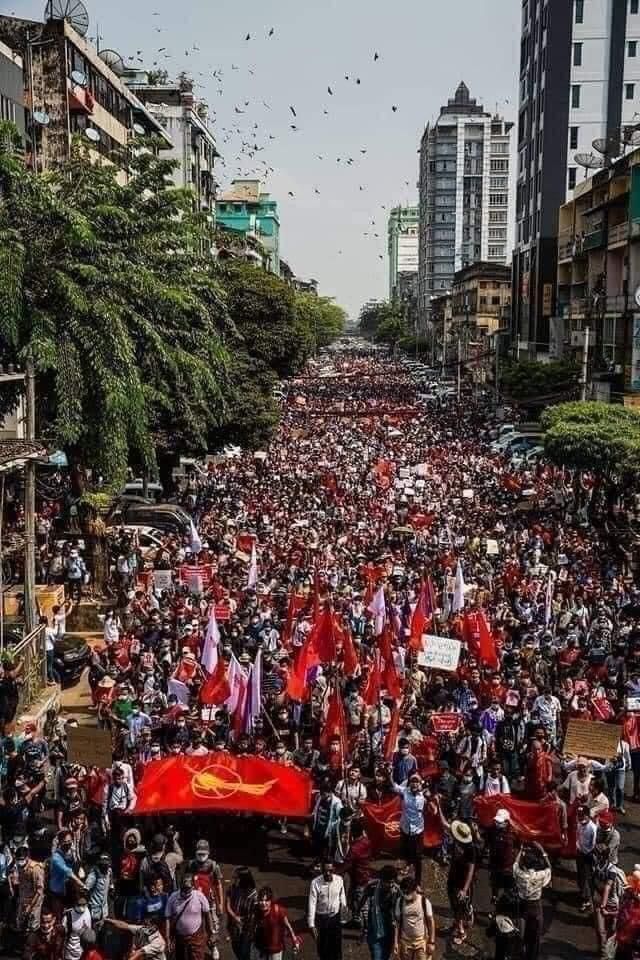
The 2021 military coup abruptly ended a decade-long experiment with semi-civilian rule, overturning the landslide electoral victory of the National League for Democracy (NLD) and detaining its leadership, including Aung San Suu Kyi. Since then, Myanmar has descended into widespread violence as resistance groups, ethnic armed organizations, and newly formed People’s Defence Forces (PDFs) have clashed with the military across large parts of the country.
Against this backdrop, the military’s decision to organize elections is presented as an attempt to normalize governance and move beyond emergency rule. The State Administration Council (SAC) argues that elections are necessary to restore constitutional order and provide a pathway to political stability. From this perspective, the vote is portrayed as a pragmatic solution to prolonged unrest.
However, many observers see the election less as a genuine democratic exercise and more as a carefully managed political process designed to legitimize continued military influence. The exclusion of major opposition parties, particularly those linked to the former civilian government, has raised serious doubts about whether the process reflects the will of the people.
Voting Under Fire
Perhaps the most striking aspect of the election is that it is being conducted amid active conflict. Large areas of Myanmar remain inaccessible due to fighting, displacement, and security concerns. Millions of citizens have been forced from their homes since the coup, while others live in regions effectively controlled by resistance forces rather than the central military authorities.
In such conditions, voter participation is inevitably uneven. While polling stations may operate in urban centers and military-controlled areas, vast rural regions—especially in ethnic minority states—are unable to participate meaningfully. This geographic fragmentation highlights a central contradiction: an election meant to unify the country is taking place in a nation that is territorially and politically divided.
Security concerns also affect voter confidence. Reports of intimidation, surveillance, and the heavy presence of security forces around polling areas contribute to fears that voting may not be free or secret. For many citizens, participation is less about political choice and more about navigating survival in an environment shaped by coercion and uncertainty.
Questions of Legitimacy and International Response
International reactions to the election have been cautious and, in some cases, openly critical. Western governments and human rights organizations have repeatedly stated that any election conducted under military rule, without the participation of detained political leaders and banned parties, lacks democratic credibility. They argue that genuine elections require not only ballots and polling stations but also freedom of expression, assembly, and political competition.
Regional responses have been more nuanced. Some neighboring countries emphasize the importance of stability and non-interference, viewing the election as an internal matter for Myanmar. Others within Southeast Asia remain divided, reflecting broader tensions within ASEAN over how to engage with the military authorities while addressing the humanitarian fallout of the conflict.
The election therefore risks deepening Myanmar’s international isolation rather than easing it. If the results are widely rejected, the new political structure could struggle to gain recognition, limiting diplomatic engagement and economic recovery.
Impact on the Civil War
One of the most pressing questions is whether the election will reduce or intensify the conflict. The military hopes that an elected government—even one closely aligned with it—will weaken resistance narratives and encourage a return to political processes rather than armed struggle. Yet resistance groups have already dismissed the vote as illegitimate and have vowed to continue their opposition.
Rather than serving as a bridge to peace, the election may reinforce existing divisions. For communities that view the military as an occupying force, the process offers little incentive to abandon resistance. In this sense, the vote could become another flashpoint in a conflict that has already claimed thousands of lives and displaced millions.
The Broader Significance
Myanmar’s election amid civil war illustrates a broader dilemma faced by conflict-affected states: can elections alone restore legitimacy and stability, or do they risk entrenching power imbalances when conducted without inclusive political dialogue? History suggests that elections held in the absence of peace, trust, and institutional independence often fail to resolve underlying crises.
For Myanmar, the vote is less an endpoint than a reflection of unresolved struggles over power, identity, and governance. Whether it marks the beginning of political normalization or merely formalizes military dominance will depend on events long after ballots are counted.
Conclusion
The Myanmar election stands as one of the most controversial political events in recent Southeast Asian history. While framed by the military authorities as a step toward democracy, it unfolds in the midst of civil war, mass displacement, and political exclusion. For many citizens, the election does not symbolize hope but rather the persistence of a system that has yet to address the root causes of the nation’s turmoil.
As the world watches, Myanmar’s future remains uncertain. True stability will likely require more than elections—it will demand inclusive dialogue, an end to violence, and a political settlement that reflects the aspirations of all its people.