As the year draws to a close, international trade has emerged as one of the defining fault lines of the global economy. Heightened trade tensions—most notably the renewed use of reciprocal tariffs by the United States—have underscored a shifting global order in which economic cooperation increasingly competes with strategic rivalry. Rather than fading into the background, trade disputes have become central to how nations pursue growth, security, and geopolitical influence.
The Return of Tariffs as a Strategic Tool
For decades, global trade policy was shaped by the assumption that lower tariffs and open markets would benefit all participants. That consensus has weakened. In recent years, tariffs have re-emerged as a favored policy instrument, particularly among major economies seeking to protect domestic industries or gain leverage over trading partners.
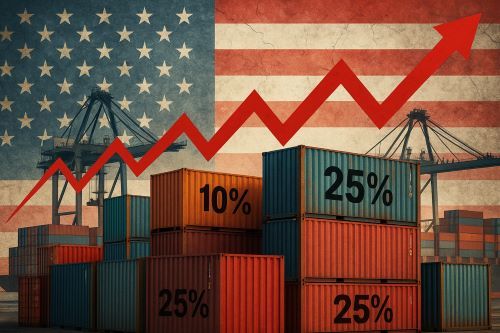
The U.S. decision to impose reciprocal tariffs reflects this new reality. By matching or countering tariffs imposed by other countries, Washington has signaled a tougher stance on what it considers unfair trade practices. Supporters argue that such measures correct long-standing imbalances and protect strategic sectors, while critics warn that they risk triggering retaliatory cycles that harm global growth.
Global Markets Feel the Pressure
The impact of these policies has been felt far beyond bilateral trade relationships. Global markets have responded with increased volatility as businesses attempt to adapt to uncertain trade conditions. Supply chains—already strained by geopolitical tensions and previous disruptions—are being recalibrated to reduce exposure to tariff risks.
Manufacturers are reconsidering where they source raw materials and where they locate production facilities. In some cases, companies are shifting operations to neutral or lower-tariff jurisdictions, accelerating trends such as “friend-shoring” and regionalization. While these adjustments may reduce vulnerability, they also increase costs, which are often passed on to consumers.
Winners, Losers, and Uneven Consequences
Trade tensions rarely affect all countries equally. Large economies with diversified markets may absorb tariff shocks more easily, while smaller or export-dependent nations face sharper consequences. Developing economies integrated into global value chains are particularly exposed, as tariffs imposed between major powers can disrupt demand and investment flows.
At the same time, some countries see opportunities. Nations positioned as alternative manufacturing hubs may benefit as firms seek to bypass tariff barriers. This has created a complex landscape in which trade conflict simultaneously constrains global growth and redistributes economic opportunities.
Multilateral Trade Under Strain
The rise in unilateral and reciprocal tariffs has also placed strain on the global trade governance system. Institutions designed to resolve disputes and promote predictable trade rules struggle to keep pace with the speed and scale of recent policy actions. As countries prioritize national interests, multilateral cooperation risks being sidelined.
This erosion of trust has long-term implications. When trade rules are perceived as flexible or selectively enforced, businesses face greater uncertainty, and investment decisions become more cautious. The result is a global economy that is less efficient and more fragmented.
Geopolitics and Economics Intertwined
Trade tensions today are not driven solely by economic considerations. They are deeply intertwined with geopolitics, national security concerns, and technological competition. Tariffs increasingly target sectors viewed as strategically important, such as energy, advanced manufacturing, and digital technologies.
This blending of economics and security marks a departure from earlier eras of globalization. Trade policy is no longer just about comparative advantage; it is also about resilience, autonomy, and influence. As a result, even temporary trade measures can have lasting structural effects on the global economy.
Looking Ahead
As the year ends, it is clear that international trade tensions are not a short-term phenomenon. Reciprocal tariffs have become part of a broader shift toward a more contested and strategic global economic environment. The challenge for policymakers will be finding a balance between protecting national interests and preserving the benefits of an interconnected global marketplace.
Whether the coming years bring renewed cooperation or deeper fragmentation will depend on how major economies manage these tensions. What is certain is that trade policy will remain a central arena in which global power and prosperity are contested.
Conclusion
The renewed spotlight on international trade tensions highlights a world in transition. The use of reciprocal tariffs, particularly by major economies like the United States, is reshaping markets, supply chains, and global economic relationships. As nations navigate this evolving landscape, the choices made today will help define the future of global trade—either as a source of shared growth or as another front in an increasingly divided world.
References
📈 Reuters — China launches WTO trade dispute against India (Dec 23, 2025)
China filed a trade dispute at the WTO over tariffs on solar and IT products, illustrating ongoing tensions and protectionism in key sectors. Reuters
🔗 https://www.reuters.com/sustainability/climate-energy/china-launches-trade-dispute-against-india-over-solar-cells-it-goods-2025-12-23/
🇨🇳 Reuters — China revises foreign trade law to bolster trade-war capabilities
China passed changes to its foreign trade law to improve its ability to manage trade disputes and external economic threats amid rising tensions. Reuters
🔗 https://www.reuters.com/world/china/china-passes-revised-foreign-trade-law-bolster-trade-war-capabilities-2025-12-27/
📊 AP News — Trump’s 2025 tariff strategy reshapes US trade policy
The U.S. drastically increased tariffs in 2025, disrupting decades of trade liberalization and creating volatility in global markets. AP News
🔗 https://apnews.com/article/d3458da225c1fdfade97ed494b23e868
🇺🇸 Reuters — Trump’s tariff actions likely to continue affecting trade in 2026
Ongoing uncertainty around high U.S. tariffs and negotiations with major partners is expected to keep global trade dynamics in flux. Reuters
🔗 https://www.reuters.com/world/china/trump-shook-up-global-trade-this-year-some-uncertainty-may-persist-2026-2025-12-22/