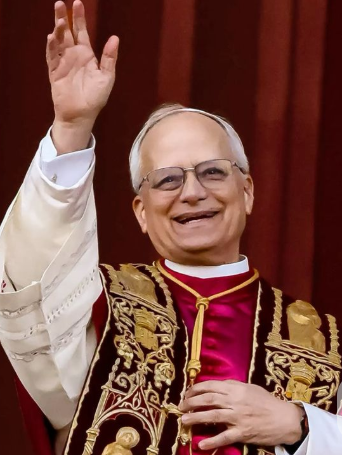
In his first Angelus message of 2026, Pope Leo issued a far-reaching appeal for peace, restraint, and a renewed global commitment to non-violence, setting a moral tone for the year ahead at a time of widespread geopolitical tension and social fragmentation. Speaking before pilgrims gathered in St. Peter’s Square, the pontiff urged nations, communities, and individuals to reject cycles of hatred and to place human dignity at the centre of political and personal decision-making.
The address, delivered from the Apostolic Palace overlooking the Vatican, was both reflective and forward-looking. While avoiding direct references to specific conflicts, the Pope spoke against war, political extremism, and the normalisation of violence, framing peace not as an abstract ideal but as a daily responsibility shared by all.
A Message Framed by Global Uncertainty
The Pope’s appeal came against a backdrop of continued armed conflicts, humanitarian crises, and rising political polarisation across multiple regions of the world. From prolonged wars and regional instability to social unrest and economic inequality, the international environment entering 2026 remains marked by anxiety and unresolved tensions.
In this context, Pope Leo presented peace not as a passive condition but as an active moral choice. He warned that indifference, silence, and the pursuit of narrow interests often enable violence just as surely as weapons do. According to the pontiff, peace begins when societies reject the idea that force is an acceptable or effective means of resolving disputes.
Non-Violence as a Moral Discipline
Central to the Angelus message was the concept of non-violence, which the Pope described as both a spiritual discipline and a practical path toward reconciliation. He emphasised that non-violence does not imply weakness or resignation but rather courage, patience, and moral clarity.
The Pope encouraged political leaders to resist rhetoric that dehumanises opponents and populations, noting that language often lays the groundwork for physical harm. He also challenged communities to examine how fear, misinformation, and prejudice can gradually erode empathy and fuel division.
By placing non-violence at the heart of his New Year message, Pope Leo aligned himself with a long tradition within the Catholic Church that views peace as inseparable from justice, truth, and compassion.
The Human Cost of Conflict
Although the address avoided naming specific wars, the Pope spoke at length about the suffering of civilians, especially children, the elderly, and displaced families. He lamented what he described as a “global fatigue with compassion,” warning that constant exposure to violence risks dulling moral sensitivity.
The pontiff called on the international community to prioritise humanitarian corridors, protect civilian infrastructure, and ensure that aid reaches those most in need. He stressed that peace cannot be achieved while millions remain trapped in poverty, displacement, or fear.
In a notable passage, the Pope urged wealthier nations to reflect on their responsibilities toward less developed regions, arguing that structural injustice and exploitation often sow the seeds of future conflict.
Peace Begins in Everyday Life
Beyond global politics, Pope Leo turned his attention to personal and social relationships. He reminded listeners that peace is first cultivated in families, schools, workplaces, and neighbourhoods. Acts of forgiveness, patience, and dialogue, he said, form the moral foundation upon which broader peace efforts depend.
The Pope encouraged individuals to resist everyday forms of aggression — whether verbal hostility, online harassment, or social exclusion — describing them as small but significant expressions of violence that corrode trust within societies.
He urged young people in particular to see themselves as “builders of peace,” capable of shaping a future that rejects fatalism and cynicism.
Faith and Responsibility in a Secular World
While rooted in Christian teaching, the Pope’s message was framed in inclusive terms, addressing people of all faiths and none. He argued that the pursuit of peace transcends religious boundaries and belongs to the shared ethical heritage of humanity.
Pope Leo called for interfaith cooperation, noting that religious communities can either inflame divisions or serve as powerful forces for reconciliation. He encouraged dialogue across belief systems, stressing mutual respect and shared concern for human dignity.
In a world increasingly shaped by technology and rapid change, the Pope warned against allowing progress to outpace moral reflection. Scientific and economic advances, he said, must be guided by ethical principles to prevent new forms of inequality and violence.
A Challenge to Political Leaders
The Angelus message included a clear appeal to those in positions of power. Pope Leo urged political leaders to place long-term peace above short-term gains, cautioning against policies driven solely by fear, nationalism, or economic advantage.
He emphasised that true leadership requires listening to the voices of the vulnerable and making decisions that protect future generations. The Pope also called for renewed commitment to international cooperation, multilateral institutions, and diplomacy, describing dialogue as “the strongest antidote to war.”
The Symbolism of a New Beginning
As the first Angelus of the year, the message carried symbolic weight. New Year addresses in the Vatican tradition are often seen as moral roadmaps, offering guidance for the months ahead rather than detailed policy prescriptions.
By focusing on peace and non-violence, Pope Leo signalled that these themes will likely shape his pastoral priorities in 2026. Observers noted that the message reflects continuity with longstanding Church teachings while also responding to contemporary global anxieties.
Reception and Reflection
Pilgrims in St. Peter’s Square received the message with sustained applause, and reactions from Catholic communities worldwide highlighted a shared sense of urgency. Many saw the appeal as a reminder that peace cannot be outsourced to governments alone but requires active participation from civil society.
While critics may question the practical impact of moral appeals in a fractured world, supporters argue that such messages play a crucial role in shaping conscience and sustaining hope.
Looking Ahead
As 2026 unfolds, Pope Leo’s Angelus message stands as a call to conscience at a time when the temptation toward division and force remains strong. Whether in international diplomacy or personal interactions, the Pope’s words challenge individuals and institutions alike to choose dialogue over domination and solidarity over indifference.
In urging a commitment to peace and non-violence, the pontiff did not promise easy solutions. Instead, he offered a demanding vision — one that insists peace is possible only when humanity recognises itself as bound together by shared dignity and shared responsibility.
#paulkizitoblog