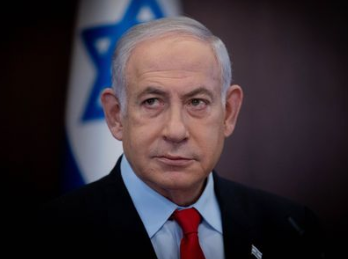
In a development drawing attention across diplomatic, religious, and security circles worldwide, Israeli Prime Minister Benjamin Netanyahu has unveiled a policy initiative described as a “New Front” to safeguard Christian communities in Nigeria confronting escalating persecution and violence. The announcement marks an uncommon step in Israel’s foreign policy, signaling a widening of its humanitarian and strategic engagement in sub-Saharan Africa.
Speaking at a press event in Jerusalem, Netanyahu characterised the initiative as a response to what he described as “systematic attacks targeting religious minorities” and a broader breakdown in security in parts of Nigeria — Africa’s most populous nation — where militant groups and criminal networks have contributed to a climate of fear for vulnerable communities.
Context: Violence and Persecution in Nigeria
Nigeria has endured a complex web of security challenges for more than a decade. Islamist insurgency in the northeast, banditry and kidnapping in the northwest and central regions, and inter-communal clashes in the Middle Belt have exacted a heavy toll on civilian populations. Christian communities in some areas have been disproportionately affected, with reports of attacks on villages, churches, and displaced families increasingly prevalent.
Human rights groups have documented incidents of targeted killings, forced displacement, and destruction of property, particularly in states bordering the insurgency zones. While violent incidents are not confined to one religious group or region, the perception of growing vulnerability among Christian populations has gained traction among advocacy organisations and foreign governments.
Israel’s “New Front”: A Multifaceted Strategy
Netanyahu’s “New Front” initiative is framed as a multifaceted effort combining diplomatic pressure, humanitarian support, and enhanced security cooperation. Although details are complex and will unfold over time, the core elements articulated by Israeli officials include:
- Increased Diplomatic Engagement: Israel plans to raise issues of religious freedom and community protection in dialogues with Nigerian authorities and international partners. The aim is to elevate these concerns within bilateral frameworks and multilateral institutions.
- Humanitarian Assistance: The initiative includes financial support for displaced families, relief programmes coordinated with faith-based and non-governmental organisations, and targeted aid to rebuild infrastructure damaged in attacks.
- Security Cooperation: Netanyahu indicated that Israel would offer training, intelligence support, and capacity-building to Nigerian security forces tasked with protecting vulnerable communities, while emphasising that any cooperation would respect Nigeria’s sovereignty and existing partnerships.
- International Coalition-Building: The plan proposes forming an international coalition supporting the protection of persecuted minorities, especially where state capacity is limited and communities face acute threats.
Israeli officials stressed that the “New Front” is not aimed at interfering in Nigeria’s internal affairs, but rather at complementing broader efforts to strengthen human rights protections, preserve pluralism, and support stability in regions affected by violence.
Domestic and Regional Responses
The announcement elicited varied reactions from political and diplomatic quarters:
- In Israel, supporters of the initiative described it as a principled stand for human dignity and religious freedom. Critics, however, questioned whether Israel should focus its diplomatic and security resources on distant conflicts, noting domestic challenges and regional tensions closer to home.
- Within Nigeria, government officials acknowledged the seriousness of communal violence but stressed that security matters must be addressed through national institutions and existing international partnerships. Abuja also sought to reassure both domestic and international audiences that protecting all citizens — regardless of religion — remains a constitutional priority.
- Regional partners, including members of the Economic Community of West African States (ECOWAS) and African Union (AU), emphasised the importance of African-led solutions and local ownership of security responses, while also recognising the potential value of external support when requested.
Historical Roots and Contemporary Dynamics
Israel’s engagement in Africa has deep historical roots, dating back to early diplomatic ties with post-colonial states. Over recent decades, these relationships have ebbed and flowed, influenced by strategic realignments, economic interests, and shifting political landscapes. Today, Israel maintains diplomatic missions and cooperation agreements with several African nations, including Nigeria.
Nigeria and Israel have engaged in sporadic defence, trade, and technical cooperation over the years, although relations have occasionally faced political challenges. The “New Front” initiative represents a renewed emphasis on humanitarian and security dimensions, particularly in the realm of protecting vulnerable populations.
Christian Communities in Nigeria: Complex Realities
Christian communities in Nigeria are not monolithic, and their experiences vary widely by region. In the predominantly Muslim north, attacks by extremist groups such as Boko Haram and its splinter factions have repeatedly targeted both churches and civilian homes. In central and Middle Belt states, disputes over land, water access, and ethnic identity sometimes intertwine with religious identities, further complicating the security landscape.
Church leaders and civil society advocates have long called for more effective protection and government accountability. They have also emphasised the need for inter-faith dialogue and community-driven conflict resolution as essential components of any lasting peace.
Humanitarian Implications
The humanitarian consequences of prolonged insecurity have been severe. Displacement has uprooted tens of thousands from their homes, overwhelming local resources and creating protracted needs for shelter, food, healthcare, and psychosocial support. Children, the elderly, and women have been particularly vulnerable to disruption of education, loss of livelihoods, and psychological trauma.
In this context, international support — particularly when coordinated with local actors and informed by ground realities — has the potential to address immediate needs while bolstering long-term resilience.
Security Cooperation: Opportunities and Constraints
The security cooperation component of Israel’s initiative is among the most sensitive. Nigeria already collaborates with a range of international partners on defence and intelligence matters, and any new framework must be carefully calibrated to avoid redundancy, miscommunication, or perceptions of external interference.
Israel’s expertise in counter-terrorism, border security, and intelligence operations is well-recognised, but implementation will require close consultation with Nigerian authorities to align with national priorities, legal frameworks, and human rights obligations.
International Coalition Building
Netanyahu’s proposal to build an international coalition aimed at protecting persecuted minorities reflects broader global trends. Governments, faith-based organisations, and civil society groups have increasingly sought collective mechanisms to address the plight of vulnerable communities in conflict zones.
Whether this coalition will focus on policy coordination, resource mobilisation, advocacy at international forums, or operational support on the ground remains an area of ongoing discussion among potential partners.
Balancing Sovereignty and Support
One of the central challenges ahead will be balancing respect for Nigeria’s sovereignty with effective support for threatened communities. Both Israel and Nigerian officials have underscored the importance of working through existing diplomatic channels and legal frameworks, avoiding any perception of external imposition.
For Nigeria, asserting ownership over security initiatives is essential to domestic legitimacy and regional standing. For external partners, demonstrating responsiveness to Nigerian leadership — rather than unilateral action — is key to constructive engagement.
Long-Term Prospects and Challenges
The announcement of the “New Front” initiative has opened a new chapter in Israeli-Nigerian relations, one that moves beyond transactional economic or diplomatic ties toward a focus on human security and inter-religious solidarity. Nevertheless, the road ahead is complex.
Success will depend on sustained dialogue, mutual respect, transparent coordination, and a realistic appraisal of both opportunities and constraints. Humanitarian relief must be coupled with efforts to address structural drivers of conflict, including governance deficits, economic marginalisation, and inter-communal mistrust.
Conclusion
Prime Minister Benjamin Netanyahu’s announcement of a “New Front” to protect Christian communities facing persecution in Nigeria represents a significant moment in international engagement on religious freedom and human security. It underscores the growing global recognition that vulnerable populations, wherever they are, require attention not just from domestic authorities but from a broader coalition of concerned nations and organisations.
Whether the initiative leads to concrete improvements in protection, cooperation between governments, and strengthened resilience for communities at risk will depend on the quality of implementation, sensitivity to local contexts, and a balanced approach that prioritises human dignity alongside respect for national sovereignty.
As 2026 unfolds, the “New Front” may well become a test case for how governments can combine moral commitment with practical action in confronting persecution and violence in an increasingly interconnected world.