President Donald Trump has approved sweeping new legislation that authorizes the United States to impose tariffs of up to 500 percent on countries that continue to purchase Russian oil, a move that dramatically escalates Washington’s economic pressure on Moscow and sends shockwaves through global energy markets.
The bill, passed after intense debate in Congress, represents one of the most aggressive trade measures ever contemplated in the context of sanctions enforcement. Rather than targeting Russia alone, the legislation is designed to punish third-party countries and companies that sustain the Russian oil trade, effectively weaponizing U.S. market access to reshape global energy behavior.
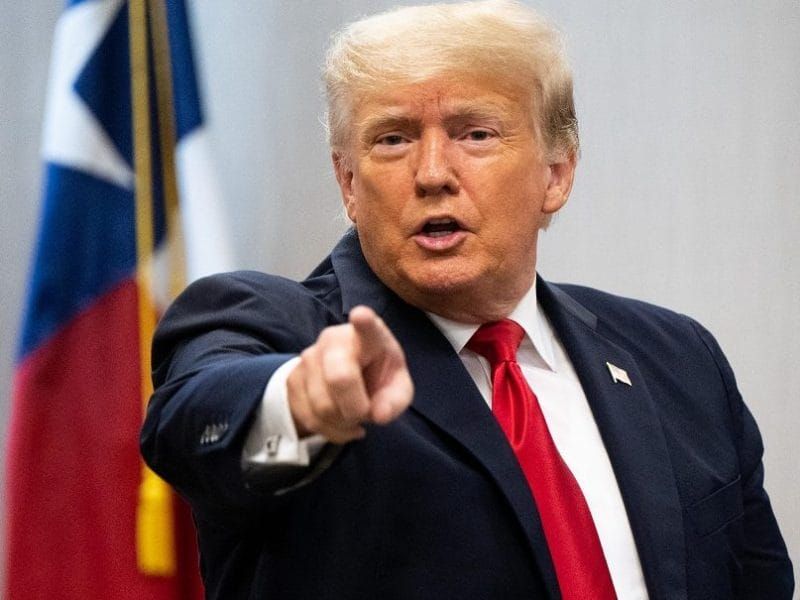
Speaking after approving the bill, President Trump framed the decision as a necessary act of economic leverage and strategic deterrence. He argued that countries cannot claim neutrality while indirectly financing Russia through continued oil purchases.
“There will be consequences for anyone propping up Russia’s oil revenues,” Trump said. “The United States will no longer tolerate backdoor support that undermines global stability and American interests.”
A New Sanctions Strategy
Unlike traditional sanctions, which typically focus on direct trade with a targeted country, the new law adopts a secondary enforcement model. Under its provisions, the U.S. government is empowered to levy extreme tariffs—reaching as high as 500 percent—on imports from countries found to be buying Russian crude or refined petroleum products.
Administration officials say the measure is designed to close loopholes that have allowed Russian oil to continue flowing to international markets despite years of sanctions. Since the start of the Ukraine conflict, Russia has increasingly relied on alternative buyers and complex trading arrangements to sustain its energy exports.
By threatening punitive tariffs rather than outright bans, the U.S. is leveraging its consumer market as a pressure point, forcing governments and corporations abroad to weigh the cost of doing business with Russia against access to American trade.
Global Markets React
The announcement immediately rattled global markets, particularly in the energy and shipping sectors. Oil prices fluctuated as traders assessed the potential disruption to supply chains, while shares of major shipping and refining firms faced renewed volatility.
Energy analysts warn that the policy could accelerate a restructuring of global oil flows. Countries heavily dependent on discounted Russian crude may now face difficult choices: absorb the economic shock of switching suppliers, negotiate exemptions with Washington, or risk punitive tariffs that could cripple exports to the U.S.
Emerging economies are expected to feel the pressure most acutely. Several rely on Russian oil as a cost-effective solution to domestic energy needs, and the prospect of U.S. tariffs introduces a new layer of economic uncertainty.
Allies and Adversaries Respond
Initial reactions from U.S. allies have been mixed. Some European officials welcomed the move as a stronger signal of resolve against Russia, arguing that half-measures have allowed Moscow to adapt and endure. Others expressed concern that unilateral tariff threats could strain diplomatic relations and destabilize already fragile economies.
Russia, for its part, condemned the legislation as economic coercion. Kremlin-linked commentators accused Washington of attempting to dictate global trade patterns and warned that the move could further fragment the international economic system.
China and India—two of the largest buyers of Russian oil since Western sanctions intensified—have not formally responded, but analysts expect quiet diplomatic engagement rather than immediate public confrontation.
Domestic Political Calculations
At home, President Trump’s approval of the bill reinforces his image as a hardline negotiator willing to use tariffs as a central tool of foreign policy. Supporters praise the measure as decisive and overdue, arguing that softer sanctions have failed to meaningfully alter Russia’s behavior.
Critics, however, caution that such extreme tariffs could boomerang back onto American consumers and businesses. Higher import costs, retaliatory measures, and strained trade relationships are among the risks highlighted by economists.
Still, the administration appears confident that the threat of tariffs—rather than their widespread application—will be enough to force compliance.
A Turning Point in Economic Warfare
The bill signals a broader shift in how the United States approaches geopolitical conflict. Trade policy, once primarily an economic instrument, is increasingly being deployed as a strategic weapon. By targeting not just adversaries but also their commercial partners, Washington is raising the stakes of global alignment.
Whether the policy succeeds will depend on enforcement and international response. If widely applied, it could significantly reduce Russia’s oil revenues. If resisted, it could accelerate the fragmentation of global trade into rival blocs.
For now, one thing is clear: with the approval of this bill, the Trump administration has drawn a bold new line in the global energy and trade landscape—one that forces governments worldwide to choose sides, not just politically, but economically.