Protests have erupted in cities across the United States following the fatal shooting of a woman by a federal immigration enforcement agent during an operation in Minnesota, an incident that has intensified national debate over the use of force, federal authority, and immigration policing.
The shooting occurred earlier this week in Minneapolis during what federal authorities described as an Immigration and Customs Enforcement (ICE) enforcement action. The woman, who was inside a vehicle at the time of the encounter, was shot by an ICE agent after officers said the situation escalated rapidly. She later died from her injuries.
Federal officials have stated that the agent involved acted in self-defense, asserting that the vehicle posed an immediate threat to officers on the scene. The Department of Homeland Security confirmed that the agent has been placed on administrative duty pending an internal investigation, a standard procedure in cases involving lethal force.
However, the official account has been met with widespread skepticism from local leaders, civil rights groups, and members of the public. Videos circulating on social media appear to show a chaotic scene, with bystanders shouting at federal agents and attempting to approach the vehicle after shots were fired. Critics argue that the footage raises serious questions about whether lethal force was necessary and whether adequate efforts were made to provide medical assistance immediately after the shooting.
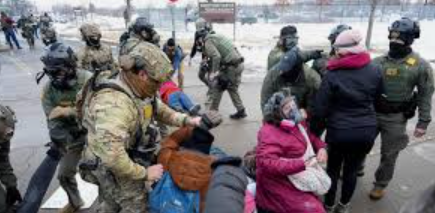
The incident has triggered large demonstrations in Minneapolis, where thousands of people gathered near the site of the shooting to hold vigils and demand accountability. Protesters carried signs condemning ICE operations and chanted slogans calling for the removal of federal immigration agents from local communities. While many demonstrations have remained peaceful, authorities reported isolated clashes between protesters and law enforcement, leading to several arrests.
As outrage spread, similar protests were organized in major cities including New York, Los Angeles, Chicago, Seattle, Washington, D.C., and Atlanta. Demonstrators in those cities framed the shooting as part of a broader pattern of aggressive federal enforcement tactics and excessive use of force, particularly in immigrant communities.
Minnesota state officials have publicly expressed concern over the lack of transparency surrounding the case. State authorities have called for an independent investigation and greater cooperation from federal agencies, noting that the incident occurred within their jurisdiction. Tensions between state and federal officials have grown after it emerged that federal investigators had taken control of key evidence, limiting the role of local law enforcement.
The Minnesota governor urged protesters to remain peaceful while acknowledging the public’s anger and grief. He also confirmed that the state was preparing contingency plans, including the possible deployment of the National Guard, should unrest escalate further.
At the federal level, senior administration officials defended ICE’s actions, emphasizing the dangers faced by agents during enforcement operations. They warned against what they described as misinformation surrounding the case and accused protest organizers of inflaming tensions before the investigation is complete.
Civil liberties organizations, however, argue that the shooting underscores long-standing concerns about accountability for federal law enforcement officers. Several advocacy groups have renewed calls for stricter rules governing the use of force by immigration agents and for clearer limits on federal operations in jurisdictions that oppose aggressive immigration enforcement.
The shooting has also revived painful memories in Minneapolis, a city still shaped by previous high-profile cases involving law enforcement use of deadly force. Community leaders say trust between residents and authorities—already fragile—has been further eroded.
As investigations continue, the case is likely to have political ramifications beyond Minnesota. Lawmakers from both parties have called for briefings on the incident, while immigration policy once again dominates national headlines ahead of a contentious election season.
For now, protests show no sign of slowing, with organizers promising continued demonstrations until the findings of an independent inquiry are made public. The outcome of the investigations—and how authorities respond—may determine whether the unrest fades or deepens into a broader national reckoning over immigration enforcement and police accountability.