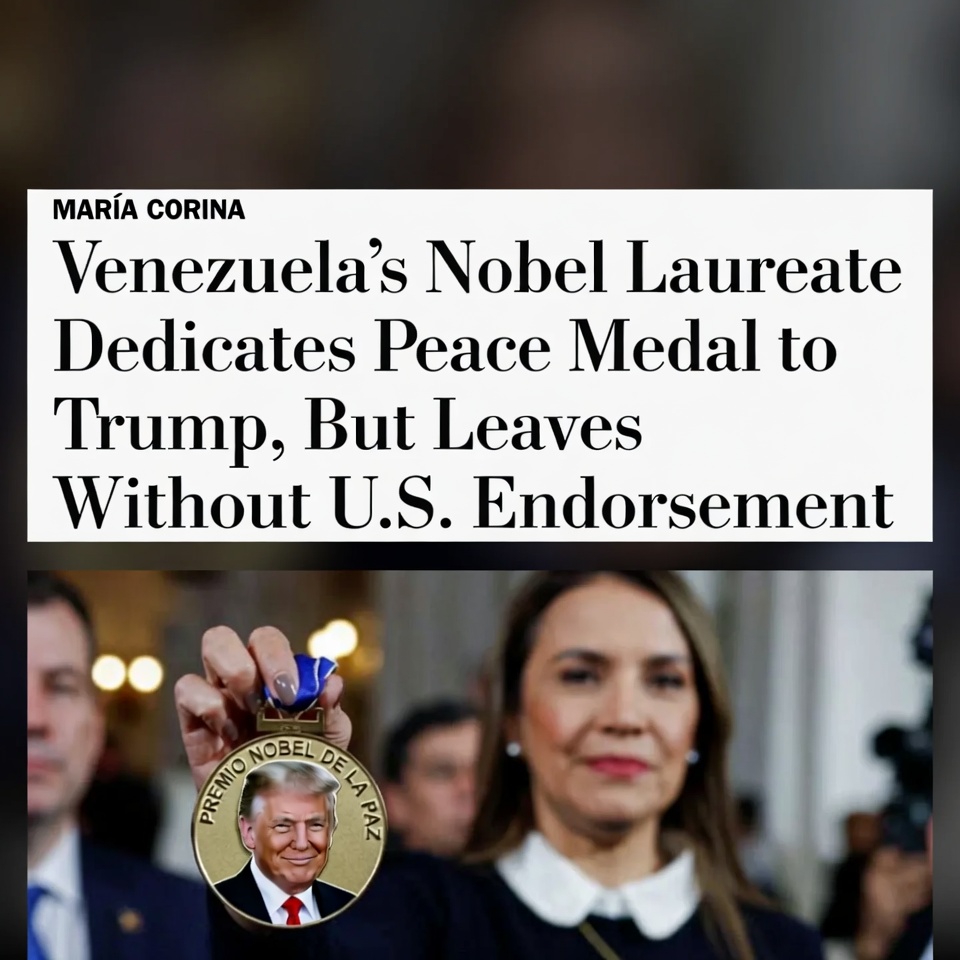
Venezuelan opposition figure and Nobel Peace Prize laureate María Corina Machado presented her peace medal to U.S. President Donald Trump during a meeting in Washington, but departed without securing his public backing to lead Venezuela’s political transition.
The symbolic gesture took place during discussions on Venezuela’s future following the collapse of Nicolás Maduro’s government. Machado described the presentation of the medal as a personal act of recognition, reflecting what she called Trump’s role in increasing international pressure on Venezuela’s former leadership.
Despite the highly publicized moment, the meeting did not result in an endorsement. Trump made no statement supporting Machado as Venezuela’s next leader, and U.S. officials later signaled that Washington would avoid taking sides in the country’s internal leadership debate.
Administration sources stressed that Venezuela’s political direction should be determined by Venezuelans themselves, through inclusive processes and broad domestic support. While acknowledging Machado’s international standing and long-standing opposition to authoritarian rule, officials stopped short of offering political backing.
Machado has emerged as one of the most prominent figures advocating democratic reform and new elections in Venezuela. Supporters see her as a credible face of change, while critics argue that deep political divisions make consensus leadership difficult in the near term.
The episode highlights the limits of symbolic diplomacy at a time when Venezuela’s transition remains uncertain. Analysts say international recognition, even at the highest level, does not automatically translate into decisive political support without clear legitimacy at home.
As Venezuela navigates an unsettled political landscape, Machado’s visit underscored the gap between global acclaim and the complex realities shaping the country’s path forward.