West Africa is a region of immense promise.
It is young, energetic, resource-rich, and culturally powerful.
Yet, across its nations, political challenges continue to slow progress, strain trust, and test stability.
To understand where West Africa is going, we must first understand what is holding it back — not with blame, but with clarity; not with anger, but with purpose.
This is a story of systems, not just leaders.
And more importantly, it is a story of solutions, not despair.
1. Leadership and the Burden of Weak Institutions
In many West African countries, politics has become too dependent on individuals rather than institutions.
When systems are weak, leadership changes bring uncertainty. Policies are reversed, reforms stall, and public confidence erodes. Power becomes personalized, and governance becomes fragile.
The result is a cycle where progress depends less on rules and more on personalities — a risky foundation for any democracy.
The solution:
West Africa must continue strengthening institutions that outlive governments: independent courts, professional civil services, accountable legislatures, and credible electoral bodies. When institutions are strong, leadership transitions become routine, not destabilizing.
2. Electoral Tensions and the Crisis of Trust
Elections should be moments of national pride. Too often, they become moments of fear.
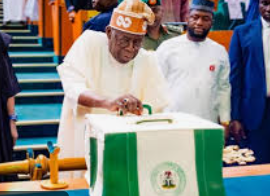
Disputed results, low voter confidence, and allegations of manipulation have weakened trust in democratic processes. When citizens stop believing that votes count, political participation declines — and instability grows.
Democracy cannot survive without belief.
The solution:
Transparent electoral processes, modern voting systems, independent monitoring, and early conflict mediation. More importantly, political actors must commit to respecting outcomes and resolving disputes through the law, not the streets.
3. The Security Challenge: When Politics and Safety Collide
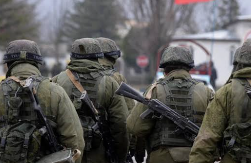
Across parts of West Africa, insecurity has reshaped political realities. Extremism, banditry, and cross-border crime thrive where governance is weak and opportunity is scarce.
When citizens feel unprotected, trust in the state declines. And when security becomes politicized, long-term solutions give way to short-term reactions.
The solution:
Security must be paired with development. Intelligence cooperation, professional security forces, and regional collaboration must go hand in hand with education, jobs, and local governance. Safety is not only enforced — it is built.
4. Youth Exclusion in a Young Region
West Africa is one of the youngest regions in the world. Yet, many young people feel locked out of political decision-making.
High unemployment, limited representation, and political systems dominated by older elites create frustration — and in some cases, unrest.
A generation that feels ignored will eventually demand attention.
The solution:
Lower barriers to political participation, support youth leadership programs, encourage civic education, and create economic pathways that turn energy into productivity. When young people are included, stability follows.
5. Economic Pressure and Political Fragility
Politics cannot be separated from economics.
Rising costs of living, unemployment, and inequality place enormous pressure on governments. When economic hardship deepens, political patience wears thin.
Citizens do not only vote with ballots — they vote with expectations.
The solution:
Sound economic management, regional trade integration, support for small businesses, and transparent resource management. When people see opportunity, politics becomes less volatile.
6. Regional Unity and Shared Responsibility
No West African country exists in isolation. Borders are shared. Challenges are shared. Futures are linked.
Political instability in one nation often spills into others — through migration, insecurity, and economic disruption.
The solution:
Stronger regional cooperation through institutions like ECOWAS, not only in crisis response but in prevention, diplomacy, and economic planning. Unity is not optional; it is strategic.
A Closing Thought: From Challenge to Choice
West Africa’s political problems are real — but they are not permanent.
Every challenge discussed here has a solution already within reach. What is required is consistency, courage, and collective responsibility — from leaders, institutions, and citizens alike.
The future of West Africa will not be defined by its difficulties, but by how deliberately it addresses them.
This is not a region standing still.
It is a region deciding its direction.
And with the right choices, West Africa’s next chapter can be one of stability, dignity, and shared prosperity.