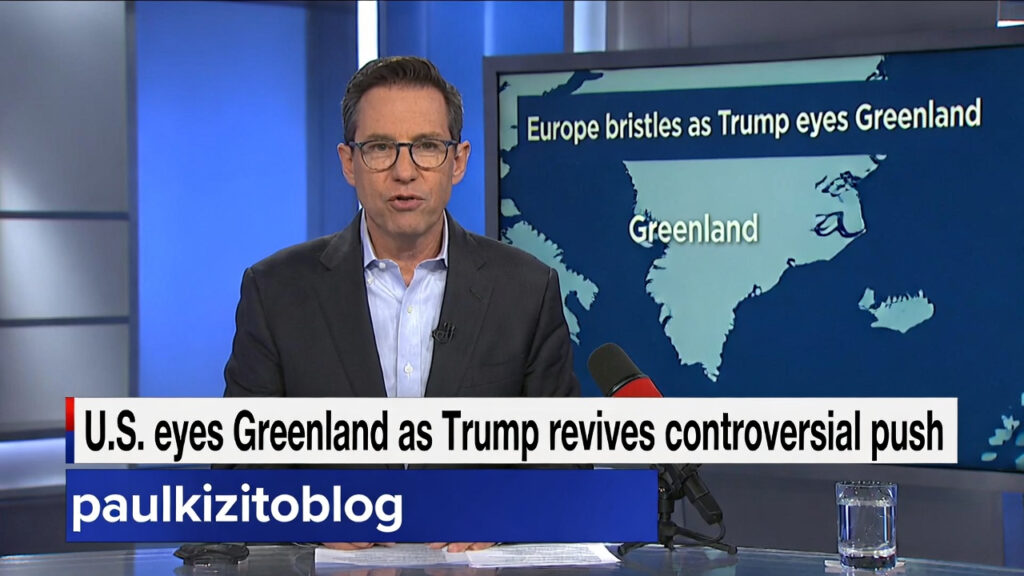
Tensions between the United States and its European allies are flaring once again after President Donald Trump renewed a controversial push for U.S. control over Greenland, coupled with fresh threats of tariffs against key European NATO partners. The remarks have triggered swift and sharp reactions across Europe, raising concerns about the future of transatlantic unity at a delicate moment for global diplomacy.
Greenland, an autonomous territory within the Kingdom of Denmark, has long held strategic significance due to its location in the Arctic and its vast reserves of rare earth minerals. President Trump has repeatedly argued that U.S. control of the island would strengthen American national security, particularly as global competition intensifies in the Arctic region. His latest comments suggest the issue remains firmly on Washington’s strategic agenda.
European leaders, however, have pushed back strongly. Officials in Denmark dismissed the idea outright, reiterating that Greenland is not for sale and that its future lies in the hands of its people. Norway echoed these sentiments, warning that such rhetoric undermines trust among allies. France and Germany went further, framing the proposal as a direct challenge to European sovereignty and international norms.
Adding to the tension are Trump’s threats to impose new tariffs on European NATO members, which he argues are failing to contribute their fair share to collective defense. Critics on both sides of the Atlantic say such measures could deepen existing trade disputes and weaken NATO cohesion at a time when Western unity is already under pressure from global security challenges.
The timing of the dispute is particularly sensitive. With world leaders, policymakers, and business executives preparing to gather for the World Economic Forum in Davos, the Greenland controversy risks overshadowing broader discussions on economic stability, climate change, and geopolitical cooperation. Diplomats fear that instead of projecting unity, the West may arrive in Davos visibly divided.
Analysts warn that while Trump’s approach may resonate with parts of his domestic political base, it carries significant diplomatic risks. Strained relations with Europe could complicate cooperation on security, trade, and global governance—areas where U.S.–European alignment has historically been a cornerstone of international stability.
As reactions continue to pour in, one thing is clear: the Greenland debate is no longer a symbolic disagreement. It has become a flashpoint highlighting deeper tensions within the transatlantic alliance, raising fresh questions about how the U.S. and Europe will navigate shared interests in an increasingly competitive and fragmented world.