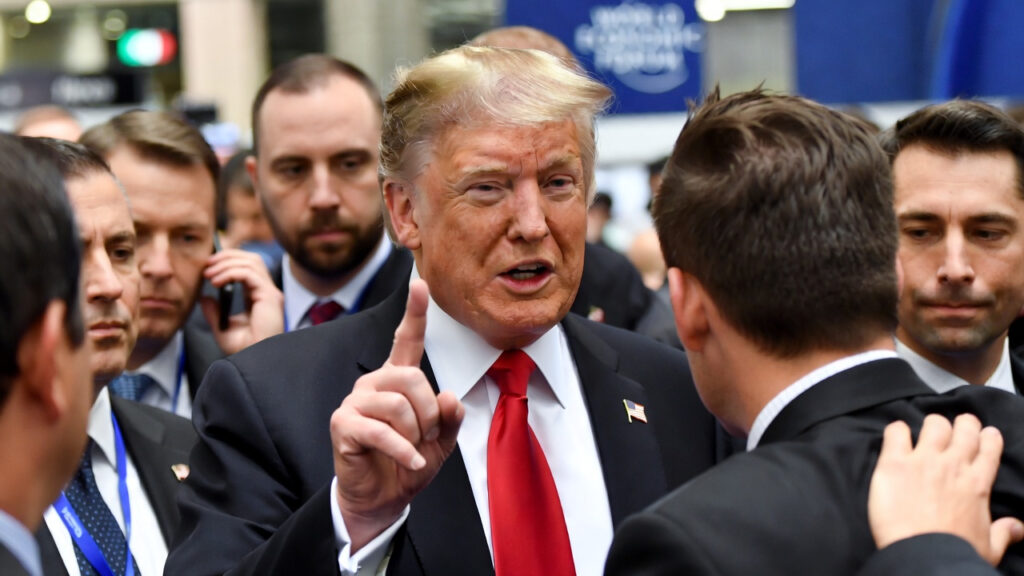
Davos, Switzerland — President Donald Trump on Thursday unveiled a new international initiative dubbed the “Board of Peace” at the World Economic Forum in Davos, presenting it as a bold alternative framework for resolving global conflicts. The announcement, however, was met with visible hesitation from many of America’s closest allies, several of whom declined to participate in the launch.
Speaking during a signing ceremony on the sidelines of the annual gathering of political and business leaders, Trump described the Board of Peace as a results-driven body aimed at accelerating diplomatic solutions to long-running wars and regional crises. He argued that existing international institutions often move too slowly and lack the enforcement power needed to secure lasting peace.
“The world needs action, not endless meetings,” Trump said. “This board is about getting deals done and stopping conflicts before they spiral out of control.”
Structure and Ambitions
According to U.S. officials, the Board of Peace is designed as a voluntary coalition of participating countries, with an initial focus on post-conflict stabilization efforts in the Middle East, particularly Gaza. The initiative is expected to combine diplomatic engagement, economic incentives and security coordination, operating alongside — rather than formally within — the United Nations system.
Trump is expected to serve as the Board’s inaugural chair, with the administration suggesting future leadership arrangements could evolve over time. Membership details and governance rules remain limited, fueling uncertainty among diplomats and policy analysts.
Uneven International Support
While representatives from several countries in the Middle East, Asia and Latin America attended the ceremony, a number of key U.S. allies — including major European powers — chose not to sign on at this stage. Officials from those countries cited concerns about the Board’s mandate, transparency and potential overlap with existing multilateral institutions.
Privately, some European diplomats expressed unease that the initiative could dilute the role of the United Nations or create parallel structures that bypass established international norms.
Others, however, acknowledged that frustration with stalled peace processes has created an opening for alternative approaches, even if skepticism remains about the Board’s long-term viability.
Mixed Reactions
Supporters of the initiative praised it as an unconventional but necessary response to global instability, arguing that traditional diplomacy has failed to prevent protracted conflicts in regions such as the Middle East, Eastern Europe and parts of Africa.
Critics counter that the success of any peace framework depends on broad legitimacy and cooperation — something the Board of Peace may struggle to achieve without buy-in from major global powers.
What Comes Next
The White House says further meetings are planned in the coming months to expand participation and clarify the Board’s operational role. Whether the initiative evolves into a lasting diplomatic platform or remains a symbolic gesture will likely depend on its ability to deliver tangible results — and persuade reluctant allies to join.
For now, Trump’s announcement has added another layer of debate to an already crowded global diplomatic landscape, highlighting both the demand for new solutions and the deep divisions over how peace should be pursued.