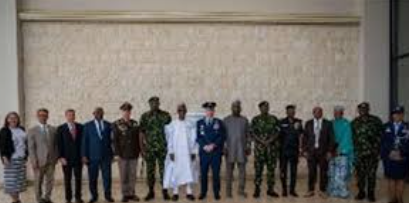
Nigeria’s military authorities say the recent visit of the United States Africa Command (AFRICOM) commander has reinforced longstanding security cooperation between Nigeria and the United States, as both countries confront evolving security threats across West Africa.
According to Nigeria’s Defence Headquarters (DHQ), the high-level visit focused on strengthening strategic collaboration, intelligence sharing, and capacity-building efforts aimed at countering terrorism, maritime insecurity, and transnational crime. The engagement comes at a time when Nigeria continues to face multiple security challenges, including insurgency in the northeast, banditry in the northwest, and piracy in the Gulf of Guinea.
During meetings with senior Nigerian military officials, discussions reportedly centered on joint training programs, logistics support, and the professional development of Nigerian armed forces personnel. The DHQ described the visit as a demonstration of mutual commitment to regional stability and a recognition of Nigeria’s central role in West African security.
U.S. AFRICOM has long partnered with Nigeria through advisory support, military exercises, and counterterrorism cooperation. While American forces do not engage in direct combat operations in Nigeria, they provide technical assistance, intelligence coordination, and training designed to enhance Nigeria’s operational effectiveness and respect for international best practices.
Nigerian defence officials emphasized that the partnership is evolving to reflect emerging threats. In addition to terrorism, both sides discussed cyber security risks, the proliferation of small arms, and the growing sophistication of criminal networks operating across porous borders. Maritime security also featured prominently, given Nigeria’s strategic position along key global shipping routes.
“The visit underscores shared security interests and the importance of sustained collaboration,” the DHQ said in a statement, adding that cooperation with the United States remains guided by Nigeria’s sovereignty and national priorities.
Analysts note that Nigeria–U.S. military relations have experienced periods of tension in the past, particularly over human rights concerns and arms procurement restrictions. However, recent engagements suggest a pragmatic reset, driven by the need to address instability spreading across the Sahel and coastal West Africa following political upheavals and security breakdowns in neighboring states.
Civil society groups have urged that enhanced military cooperation be matched with strong oversight and accountability. They argue that foreign partnerships should not only improve battlefield outcomes but also support reforms that build public trust in security institutions.
For the United States, Nigeria remains a key partner in Africa due to its population size, economic influence, and leadership role in regional peacekeeping efforts. For Nigeria, cooperation with AFRICOM offers access to advanced training, intelligence frameworks, and operational experience that may be difficult to develop independently.
As insecurity continues to threaten livelihoods and economic growth, Nigerian authorities say international partnerships will remain an important component of their broader security strategy. Whether reinforced cooperation with the U.S. will translate into measurable improvements on the ground will depend on sustained commitment, effective coordination, and parallel investments in governance and development.