Iran has launched large-scale retaliatory strikes targeting American military bases across the Middle East, dramatically escalating tensions following coordinated airstrikes earlier by the United States and Israel on Iranian territory.
The counter-offensive marks one of the most dangerous moments in regional geopolitics in recent years, raising fears of a wider war involving multiple countries.
Iranian Retaliation Begins
Iran’s military confirmed it carried out missile and drone attacks against U.S. military installations hosted by several Gulf nations. The operation, described by Iranian officials as a defensive response, targeted locations believed to support American military operations in the region.
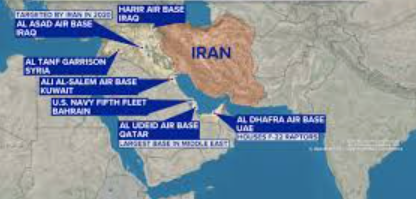
Reports indicate strikes or attempted strikes near:
- U.S. Fifth Fleet headquarters in Bahrain
- Al Udeid Air Base in Qatar
- Al Dhafra Air Base in the United Arab Emirates
- Ali Al Salem Air Base in Kuwait
- Additional facilities across Jordan and Iraq
Explosions and air-defense interceptions were reported across multiple capitals, while several countries temporarily closed their airspace as a precaution.
Regional Impact
Authorities in Gulf states confirmed missile interceptions, though some impacts were reported. A civilian fatality was confirmed in Abu Dhabi after debris from intercepted missiles fell in a residential area.
Air raid sirens sounded across parts of the region, and commercial airlines suspended or rerouted flights, highlighting the immediate disruption to one of the world’s busiest aviation corridors.
Military analysts say the coordinated nature of the strikes demonstrates Iran’s capability to simultaneously target multiple strategic locations hosting U.S. forces.
Tehran’s Message
Iranian officials described the attacks as a response to what they called aggression by the United States and Israel earlier in the day. Tehran warned that all American and allied military assets in the region could remain legitimate targets if hostilities continue.
The Iranian leadership also called for international intervention through diplomatic channels while urging national unity amid fears of prolonged conflict.
Washington Responds
U.S. officials acknowledged the attacks and warned Iran against further escalation. American military assets across the Middle East were placed on heightened alert, while additional naval forces were reportedly deployed to secure regional stability.
President Donald Trump reiterated that U.S. operations were aimed at neutralizing security threats and preventing Iran from advancing military capabilities viewed as destabilizing.
Global Reactions
International leaders have expressed alarm at the rapid escalation:
- Several governments urged immediate de-escalation.
- Russia condemned earlier U.S.–Israeli strikes and called for emergency diplomatic talks.
- Aviation regulators issued warnings about risks to civilian air travel in the region.
Energy markets and global security analysts are closely monitoring developments, warning that prolonged conflict could disrupt oil supplies and international trade routes.
What Happens Next?
The situation remains fluid, with both sides signaling readiness for further action while diplomatic efforts intensify behind the scenes.
Experts caution that continued retaliation could transform localized military exchanges into a broader regional war involving multiple state and non-state actors.
For now, the Middle East stands on edge as the world watches whether deterrence or escalation will shape the next phase of the crisis.