
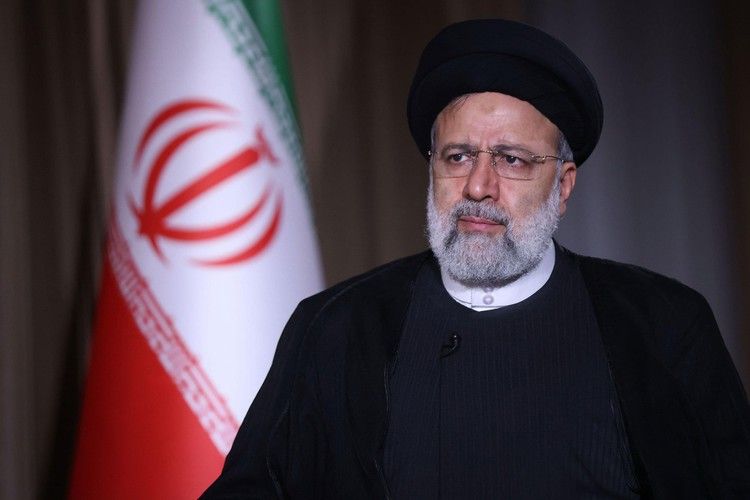
The question of succession in Iran has long hovered in political circles, whispered about in diplomatic briefings and debated quietly within clerical institutions. Now, that question has taken center stage as
Mojtaba Khamenei increasingly emerges as the most plausible figure to inherit the mantle of supreme leadership from his father, Ali Khamenei. While no formal announcement has transformed speculation into constitutional fact, the consolidation of influence around Mojtaba signals a pivotal moment in the Islamic Republic’s history — one that could shape domestic governance, regional security, and global diplomacy for years to come.
For decades, leadership in the Islamic Republic has revolved around the doctrine of Velayat-e Faqih — guardianship of the Islamic jurist — a system institutionalized after the 1979 revolution led by Ruhollah Khomeini. The supreme leader stands at the apex of political and religious authority, commanding the armed forces, shaping foreign policy, overseeing the judiciary, and holding ultimate say over key national decisions. The position is not hereditary by design; it is meant to reflect a combination of religious scholarship, political judgment, and clerical consensus. Yet history often bends under the weight of power realities, and Mojtaba’s rise illustrates how institutional ideals and political pragmatism can intersect in unexpected ways.
Unlike his father, Mojtaba has never held a high-profile government post. He has not served as president, minister, or parliamentarian. His influence, instead, has been cultivated behind closed doors. Educated in Qom’s seminaries and holding the clerical rank of hojjatoleslam, he lacks the senior theological credentials traditionally associated with supreme leadership. However, in modern Iran, authority does not rest on scholarship alone. Networks, alliances, and control of security institutions have become equally decisive.
Central to Mojtaba’s perceived strength is his relationship with the Islamic Revolutionary Guard Corps. The IRGC has evolved from a revolutionary militia into one of the most powerful institutions in the country, wielding influence not only over military strategy but also over economic assets, infrastructure, and regional proxy networks. Observers widely believe that Mojtaba has built enduring ties with senior commanders, positioning himself as a trusted interlocutor between clerical leadership and security elites. In a system where stability often depends on the alignment of religious authority and military loyalty, such ties are invaluable.
His critics, however, argue that this very alignment reflects a troubling shift in the Islamic Republic’s balance of power. They contend that increasing reliance on security institutions risks further militarizing governance and narrowing political space. Mojtaba’s alleged involvement in the suppression of protests following the disputed 2009 presidential election — protests commonly referred to as the Green Movement — remains a point of contention among reform-minded Iranians and members of the diaspora. While he has never publicly acknowledged directing security operations, his proximity to the centers of decision-making during that period has shaped perceptions of him as a hardline guardian of regime continuity.
The constitutional mechanism for choosing a supreme leader rests with the Assembly of Experts, an elected body of clerics empowered to appoint, supervise, and, in theory, dismiss the supreme leader. Historically, the Assembly’s deliberations have been opaque, and its decisions have reflected complex internal bargaining among religious and political factions. If Mojtaba were selected, it would represent a moment of both continuity and transformation — continuity in ideological direction, transformation in the sense that leadership would pass from father to son for the first time in the republic’s history.
Such a transition carries symbolic weight. The revolution of 1979 sought to dismantle monarchy and hereditary rule. A succession perceived as dynastic could challenge the revolutionary narrative that legitimacy flows from religious merit and popular endorsement rather than bloodline. Supporters argue that Mojtaba’s candidacy is not about heredity but about competence and trust cultivated over decades. Detractors counter that even the appearance of familial succession risks undermining the republic’s foundational principles.
Beyond symbolism, practical governance concerns loom large. Iran faces a web of internal pressures: economic sanctions, inflation, youth unemployment, and periodic waves of social unrest. The country’s demographic profile skews young, and many citizens express frustration over limited economic opportunity and social restrictions. A new supreme leader would inherit not only a vast security apparatus but also a society grappling with modern aspirations and global connectivity. Whether Mojtaba could recalibrate policy to address domestic grievances while preserving ideological orthodoxy remains an open question.
Regionally, the stakes are equally high. Iran’s foreign policy architecture has long relied on a network of alliances and proxy relationships extending across the Middle East. Groups such as Hezbollah in Lebanon and Hamas in Gaza form part of what Tehran describes as its “axis of resistance.” These relationships serve strategic goals: deterrence against adversaries, influence beyond national borders, and leverage in diplomatic negotiations. Mojtaba’s close association with security institutions suggests that this regional posture would likely continue, at least in its broad contours.
This continuity would have implications for relations with the United States and Israel, both of which view Iran’s regional activities and nuclear ambitions with deep suspicion. Diplomatic efforts to revive or renegotiate nuclear agreements have oscillated between cautious engagement and renewed sanctions. A leadership transition perceived as consolidating hardline influence could complicate future negotiations, particularly if trust deficits widen further. At the same time, political transitions sometimes create unexpected openings for recalibration. Much would depend on Mojtaba’s strategic calculations and the broader constellation of advisors shaping policy around him.
Internationally, governments are assessing not just the identity of the next leader but the durability of the system he would command. The Islamic Republic has proven resilient through war, sanctions, internal protests, and generational change. Yet resilience does not preclude adaptation. A younger supreme leader could, in theory, offer a longer time horizon for strategic planning. Mojtaba, born after the era of monarchical rule and coming of age during the Iran-Iraq War, represents a different generational experience from that of the revolution’s founding figures. Whether that generational shift translates into policy innovation or deeper entrenchment remains uncertain.
Within Iran’s clerical establishment, reactions are likely mixed. Senior scholars in Qom may question whether Mojtaba’s theological credentials suffice for supreme leadership. Others may prioritize political cohesion and institutional survival over formal hierarchies of scholarship. The delicate interplay between religious legitimacy and political expediency has always defined the republic’s evolution. In times of perceived external threat, cohesion often outweighs internal debate.
Public sentiment, though difficult to measure precisely, adds another layer of complexity. Urban youth, reformist activists, conservative loyalists, and rural communities often hold divergent views about governance and identity. Some may see continuity as a safeguard against instability; others may interpret it as resistance to meaningful reform. The absence of direct public participation in selecting the supreme leader amplifies the importance of perception. Legitimacy in such contexts rests not only on constitutional procedure but also on public acceptance.
For global observers, Mojtaba’s emergence underscores a broader lesson about political systems built around concentrated authority. Succession planning, even when institutionalized, can become a crucible for competing visions of the future. In Iran’s case, the decision will reverberate through energy markets, security alliances, and diplomatic corridors from Washington to Brussels to Beijing. The country’s strategic geography, vast hydrocarbon reserves, and ideological commitments ensure that its leadership choices matter far beyond its borders.
Ultimately, the story of Mojtaba Khamenei’s rise is not merely about one individual. It is about the evolution of a revolutionary state navigating its fifth decade. It is about how institutions adapt when founding generations fade. And it is about how domestic politics intersect with regional rivalries and global power competition. Whether his potential leadership marks a new chapter or a continuation of established doctrine will depend on decisions made in Tehran’s most guarded chambers — and on how effectively those decisions address the aspirations and anxieties of a complex, dynamic society.
As Iran stands at this inflection point, the international community watches closely. Leadership transitions can destabilize or consolidate, provoke confrontation or open pathways to dialogue. Mojtaba Khamenei’s possible ascent embodies both continuity and uncertainty — a reminder that in geopolitics, the personal and the structural are often inseparable.










