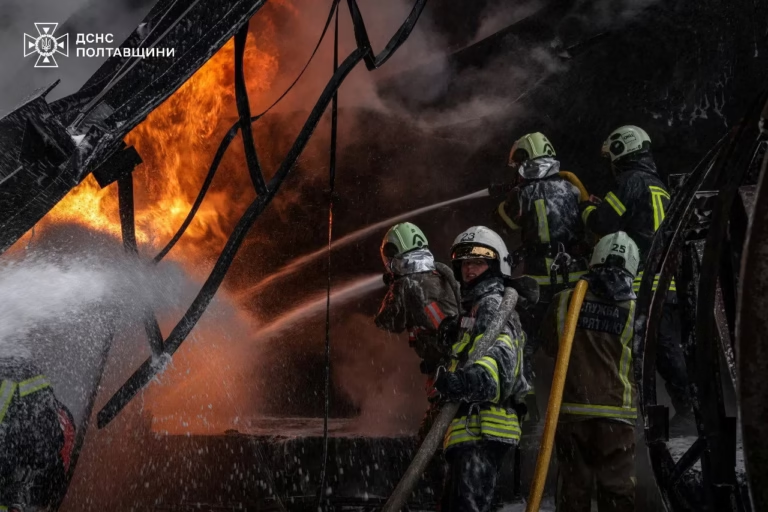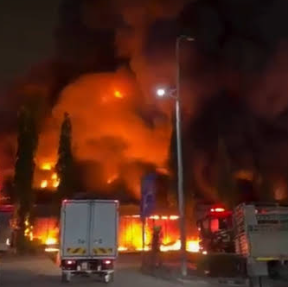
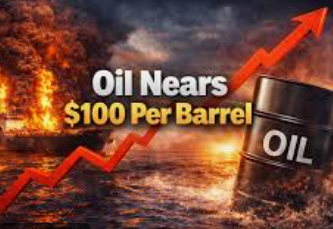
Global oil markets are under mounting pressure as prices surge toward—and in some cases exceed—$100 per barrel, reflecting deepening supply constraints and escalating geopolitical tensions. The sharp
rise marks a critical moment for the global economy, with analysts warning that sustained disruptions could trigger wider financial instability.
At the heart of the الأزمة is a significant supply shock linked to intensifying conflict in the Middle East, involving key players such as Iran, Israel, and the United States. The situation has evolved rapidly in recent weeks, transforming from isolated incidents into a broader regional confrontation with far-reaching consequences.
Industry estimates suggest that as much as 10 million barrels of oil per day have been affected by the الأزمة—making it the largest disruption in modern energy market history. This scale of supply loss is unprecedented, placing immense strain on global energy systems that are already operating within tight margins.
A key focal point of the disruption is the Strait of Hormuz, a narrow but critical maritime passage through which a substantial portion of the world’s oil supply flows. Heightened military activity and security concerns in the area have slowed or, in some cases, halted shipments, creating bottlenecks that ripple across international markets.
The impact on prices has been immediate and severe. Crude benchmarks have climbed rapidly, with traders reacting not only to current shortages but also to the خطر of prolonged instability. Market volatility has increased sharply, as uncertainty surrounding supply routes and production levels continues to grow.
Beyond energy markets, the consequences are being felt across the global economy. Higher oil prices are translating into increased fuel costs, pushing up transportation expenses and raising production costs for businesses worldwide. These pressures are feeding into broader inflationary trends, complicating efforts by central banks to stabilize prices.
Economists are increasingly обеспокоены about the risk of stagflation—a scenario in which economic growth slows while inflation remains persistently high. Such conditions pose a significant challenge for policymakers, limiting the effectiveness of traditional monetary tools and increasing the احتمال of prolonged economic strain.
In response to the evolving crisis, major economies and international institutions have begun coordinating efforts to manage the fallout. The Group of Seven (G7) has held emergency discussions focused on stabilizing energy markets and ensuring supply continuity. However, the complexity of the situation means that quick solutions remain elusive.
The crisis is also exposing the vulnerability of global supply chains. Industries that rely heavily on energy inputs—including aviation, shipping, and manufacturing—are facing rising operational costs and potential disruptions. In some cases, companies are already adjusting routes, scaling back operations, or passing costs on to consumers.
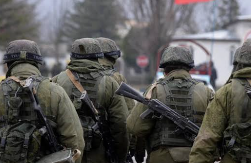
Meanwhile, the broader geopolitical landscape is becoming increasingly fragile. The current conflict is not occurring in isolation but rather against the backdrop of existing tensions and ongoing disputes in other regions, including the continuing war in Ukraine. This convergence of crises is amplifying uncertainty and raising concerns about the resilience of the global system.
Despite ongoing diplomatic efforts, the outlook remains highly uncertain. Much will depend on whether tensions in the Middle East can be contained and whether critical infrastructure and transit routes can be secured. A prolonged disruption could push oil prices even higher, with some analysts warning of scenarios in which prices approach $150 per barrel.
For now, markets remain on edge, closely monitoring developments on the ground and signals from policymakers. The coming weeks are likely to be decisive in determining whether the current shock stabilizes or escalates into a more severe and prolonged crisis.
What is clear is that the العالم is entering a period of heightened risk, where energy security, geopolitical stability, and economic resilience are becoming increasingly intertwined. As oil prices hover near the $100 mark, the global economy faces a stark reminder of how quickly disruptions in one region can reverberate across the entire world.