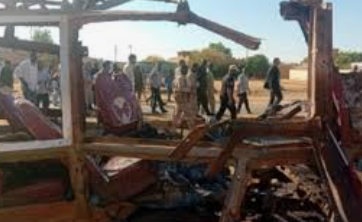
A deadly strike on a hospital in Sudan has killed at least 64 people, including 13 children, in what global health officials are describing as one of the most alarming attacks on medical infrastructure since the country’s war began.
The facility, located in East Darfur, was reportedly hit while treating civilians, leaving patients and healthcare workers among the dead. The scale of the casualties—and the presence of children among them—has intensified international concern over the growing disregard for civilian life in the conflict.
World Health Organization Director-General Tedros Adhanom Ghebreyesus condemned the attack, warning that violence against hospitals is becoming a recurring and dangerous pattern. He called for immediate protection of healthcare facilities and urged all parties to respect international humanitarian law.
Beyond the immediate loss of life, the destruction of the hospital has had a cascading effect. Critical services—including emergency care, maternity wards, and pediatric treatment—have been forced to shut down, cutting off access to essential healthcare for thousands in an already vulnerable region.
Responsibility for the strike remains contested. Rights groups have pointed to the involvement of military forces, while officials have denied intentionally targeting the facility. The lack of clarity reflects a broader challenge in Sudan’s war, where accountability is often elusive and civilian sites are increasingly caught in the crossfire.
Since fighting erupted in 2023 between the national army and paramilitary forces, Sudan has spiraled into one of the world’s most severe humanitarian crises. Millions have been displaced, and basic services have collapsed across large parts of the country. Attacks on hospitals, once considered off-limits, are now contributing to the erosion of what little protection remains for civilians.
The latest incident underscores a stark reality: in Sudan’s conflict, the boundaries between military targets and civilian life are rapidly dissolving. For many, even hospitals—symbols of care and refuge—are no longer safe.