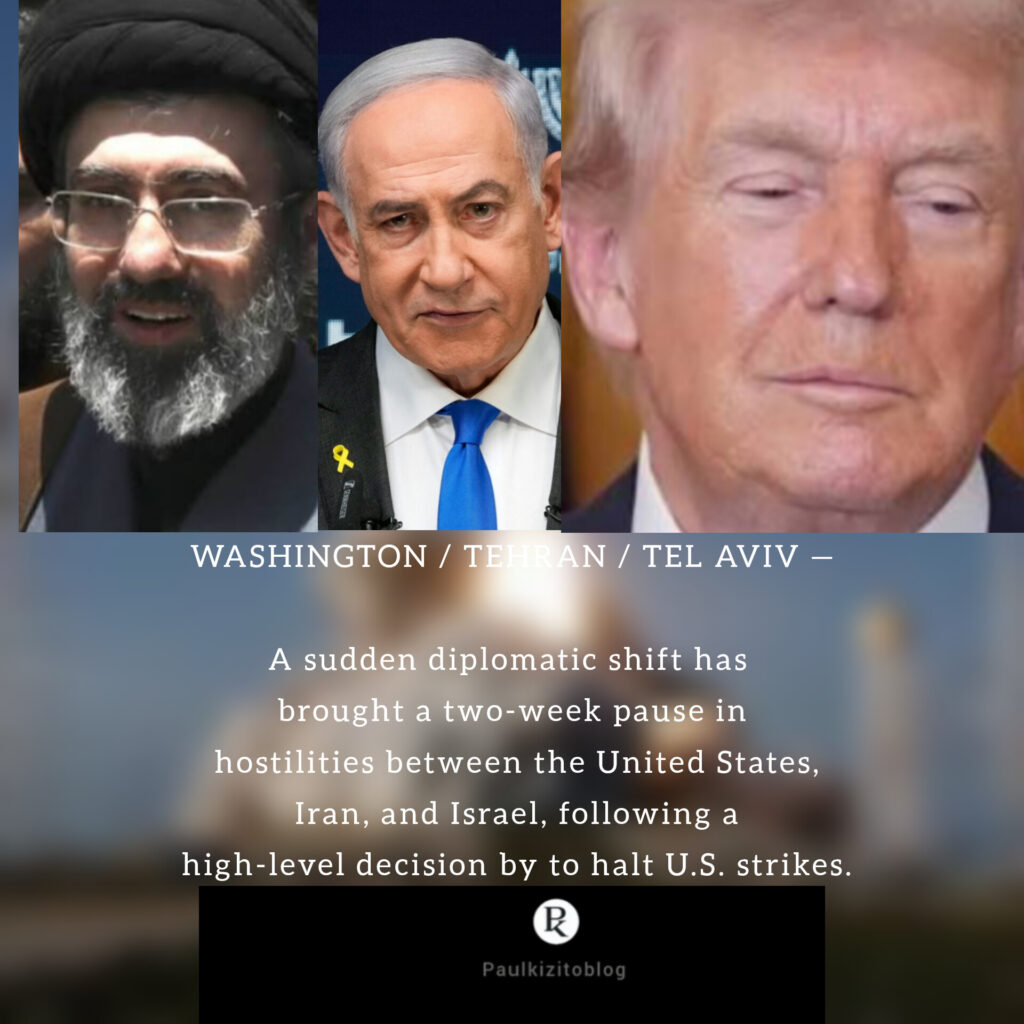
A temporary but significant de-escalation has been reached in the Middle East, as United States, Israel,
and Iran agree to a two-week ceasefire, halting ongoing hostilities and creating a narrow window for diplomatic engagement.
The agreement, which comes amid heightened regional tensions, is aimed at stabilizing the situation and preventing further military escalation. Central to the truce is a shared expectation that the Strait of Hormuz—a critical global oil transit route—will be reopened, easing concerns over energy supply disruptions and maritime security.
The two-week pause is being framed as a strategic opportunity for all parties to reassess and engage in dialogue. While not a permanent resolution, the ceasefire reflects a mutual recognition of the risks posed by continued confrontation, both regionally and globally.
Analysts note that the reopening of the Strait of Hormuz could have immediate implications for international markets, given its role in transporting a significant portion of the world’s النفط exports. A return to safe passage through the corridor would likely calm volatile energy prices and restore a degree of confidence in global supply chains.
Despite the breakthrough, uncertainty remains. The ceasefire is limited in duration, and longstanding tensions between the parties have yet to be resolved. Observers caution that without sustained diplomatic efforts, the current pause could prove short-lived.
For now, however, the agreement offers a moment of cautious optimism—two weeks in which diplomacy, rather than conflict, will define the next chapter in a deeply complex geopolitical landscape.