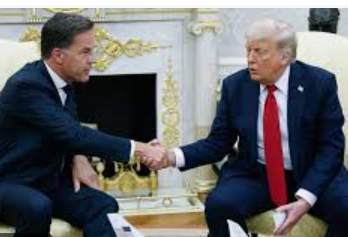
Tensions within the transatlantic alliance have come into sharp focus following a candid meeting between President Donald Trump and NATO Secretary-General Mark Rutte at the White House. What emerged was not just a diplomatic disagreement, but a revealing glimpse into shifting expectations and growing unease inside NATO.
A Fracture in Expectations
President Trump did not mince words. He argued that NATO “wasn’t there when we needed them,” referring to the recent U.S. military confrontation with Iran. His criticism reflects a longstanding view: that allies benefit from American security guarantees but hesitate when Washington seeks direct military backing.
For Trump, the issue is not merely strategic—it is transactional. His stance suggests that alliances should deliver tangible support during moments of conflict, not just rhetorical solidarity or logistical cooperation.
Rutte’s Diplomatic Balancing Act
Rutte, however, struck a more measured tone. Describing the discussion as “frank,” he acknowledged Trump’s frustration while emphasizing that several European nations did contribute in non-combat ways, including intelligence sharing, coordination, and logistical assistance.
His response underscores a key difference in perspective: while the U.S. may expect military alignment, many European members view NATO as a defensive alliance—not one obligated to support every U.S.-led operation abroad.
The Iran Factor
At the heart of the dispute lies the broader question of NATO’s role in conflicts beyond its traditional scope. The Iran crisis exposed this ambiguity. Several member states declined direct involvement, citing legal, political, or strategic concerns.
This divergence highlights an uncomfortable reality: NATO’s unity is strongest when responding to clear collective threats, but far less certain when confronting conflicts driven by individual member priorities.
A Test of Alliance Cohesion
The implications go beyond one disagreement. Trump’s remarks raise concerns about the future of U.S. commitment to NATO, particularly if allies are seen as unreliable in times of need. Although institutional and legal safeguards make a full U.S. withdrawal unlikely, political pressure could reshape the nature of the alliance.
Meanwhile, European leaders face their own dilemma—how to maintain strong ties with Washington while preserving strategic autonomy.
The Bigger Picture
The exchange between Trump and Rutte reflects a broader transformation in global security dynamics. NATO is no longer just a Cold War relic or a unified bloc; it is an alliance navigating competing priorities, domestic pressures, and evolving threats.
What remains clear is that the concept of collective defense is being reinterpreted in real time. Whether NATO can adapt without fracturing will depend on how its members reconcile these diverging expectations.