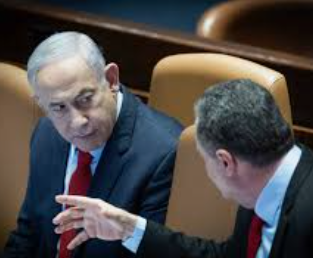
Israel’s Prime Minister Benjamin Netanyahu has made his position unmistakably clear: there will be no ceasefire in Lebanon—at least for now.
At the same time, he has signaled a willingness to engage in talks, creating a dual-track approach that reflects both military determination and diplomatic caution.
No Pause in Military Operations
Netanyahu’s rejection of a ceasefire underscores Israel’s current strategy: maintain operational pressure while pursuing security objectives along its northern border.
The conflict, largely centered around clashes with Hezbollah, has intensified in recent weeks, with cross-border strikes raising fears of a broader regional escalation.
From Israel’s perspective, halting operations prematurely could:
- Allow adversaries to regroup
- Undermine deterrence
- Leave key security concerns unresolved
In this context, a ceasefire is viewed not as de-escalation, but as a potential strategic setback.
Talks Without a Truce
Despite ruling out an immediate ceasefire, Netanyahu confirmed that discussions are underway—suggesting that diplomacy has not been abandoned, only recalibrated.
This approach reflects a familiar pattern in conflict management:
- Military pressure is sustained on the ground
- Negotiations proceed in parallel behind the scenes
The goal is to strengthen leverage at the negotiating table while avoiding concessions made under pressure.
A Complex Regional Equation
The situation in Lebanon cannot be separated from the wider regional dynamics, particularly tensions involving Iran and its network of allied groups.
Israel’s stance aligns with a broader effort to counter what it sees as growing threats along multiple fronts. By keeping military operations active, it aims to shape the strategic environment before any formal agreement is reached.
However, this also increases the risk of escalation—especially if miscalculations occur.
International Pressure Builds
Netanyahu’s position is likely to draw mixed reactions globally.
Some allies may support Israel’s right to defend itself, while others are expected to push for an immediate ceasefire to prevent further humanitarian fallout and regional instability.
The absence of a truce in Lebanon—especially following limited ceasefire efforts elsewhere in the region—highlights the fragmented nature of current diplomatic initiatives.
The Balancing Act
Israel now faces a delicate balance:
- Continuing military operations to achieve strategic goals
- Engaging in talks to avoid a wider war
- Managing international expectations and pressure
This balancing act will determine whether the situation moves toward de-escalation—or deeper confrontation.
The Bottom Line
Netanyahu’s message reflects a hardline reality:
talks may be possible, but a ceasefire is not yet on the table.
In the current climate, diplomacy is not replacing force—it is operating alongside it.
And until those two tracks converge, the conflict in Lebanon is likely to remain active, unpredictable, and deeply consequential for the wider region.