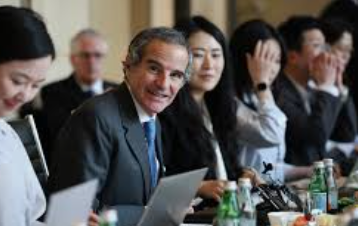
SEOUL, April 15 — The head of the United Nations nuclear watchdog has called for strict and continuous inspections of Iran’s nuclear activities in any future agreement aimed at ending the conflict with the United States and its allies.
Rafael Grossi, Director General of the International Atomic Energy Agency (IAEA), said any deal that lacks “very detailed verification measures” would fail to provide meaningful guarantees and risk becoming, in his words, “an illusion of an agreement.”
His comments come as diplomatic efforts intensify to restart negotiations between United States and Iran following a breakdown in earlier talks and ongoing hostilities linked to the wider Middle East conflict.
Verification at the centre of negotiations
Grossi stressed that Iran’s extensive nuclear programme would require sustained international oversight.
He said inspectors from the IAEA must be present to monitor facilities and verify compliance under any future settlement, noting that without access, it would be impossible to confirm the peaceful nature of the programme.
The remarks reflect long-standing concerns from Western governments about Iran’s uranium enrichment levels and the lack of full access to certain nuclear sites following recent strikes and heightened tensions.
Talks continue amid conflict backdrop
The statement comes as the United States signals that a new round of talks with Iran could take place within days, despite continued military pressure and disputes over nuclear restrictions.
Previous negotiations held in Pakistan failed to produce a breakthrough, with disagreements centered on enrichment limits, sanctions relief, and verification mechanisms.
Diplomatic sources say the two sides remain far apart, but both continue to explore pathways back to negotiations.
Nuclear risks remain central issue
Iran maintains that its nuclear programme is for peaceful purposes and denies seeking nuclear weapons. However, Western officials continue to insist that any agreement must include strict limits on enrichment and full transparency measures.
The IAEA has repeatedly warned that without robust inspections, the international community would have no reliable way to assess Iran’s nuclear capabilities or intentions.
A fragile diplomatic window
Despite ongoing tensions, international mediators are pushing for renewed engagement, arguing that diplomacy remains the only viable path to prevent further escalation.
However, Grossi cautioned that time is limited, and that without enforceable verification, any agreement risks collapsing under uncertainty.
As negotiations continue to evolve alongside military developments, the role of nuclear oversight is emerging as a decisive factor in whether a durable settlement can be reached.