On Tuesday, Britain alongside France takes the lead in hosting an urgent online meeting of defense
leaders from over forty countries. Finalizing strategies for a joint effort to secure shipping routes through the Strait of Hormuz drives the agenda. Military coordination under one unified plan becomes the goal. A broad alliance stands ready to act when needed.
Out of nowhere, tensions climbed higher when Iran declared it would act fast and firmly against any military ships moving into the key sea passage. Leading the urgent session were UK Defence Chief John Healey alongside France’s defence head, Catherine Vautrin. This gathering followed hard on the heels of Tehran’s blunt message. One wrong move, officials fear, could spark rapid escalation. The stakes? Sky-high. So too the pressure on both nations to respond carefully. Not acting carries risks just as great as overreacting
MARITIME MOBILIZATION
One goal stands clear at the top-level meeting: turning a wide-ranging deal from April into something that actually works on the ground. A new operation, labeled purely protective by leaders in Britain and France, would move ships safely through risky waters, sweep underwater threats, while eyes in the sky keep watch overhead.
Ahead of the negotiations, France sent its nuclear-powered carrier Charles de Gaulle as a visible move. The UK, meanwhile, announced Saturday that the destroyer HMS Dragon is moving into position ahead of deployment.
IRANIAN DEFIANCE
Out here, the clash has thrown world fuel trade into chaos ever since the route got mostly shut down after fighting started on February 28. Speaking up Monday, Iran’s deputy foreign minister, Kazem Gharibabadi, claimed Tehran alone holds the key to safety in the passage, calling the West’s warships an act of agitation.
A sharp reaction awaits British and French naval vessels should they challenge our control of these waters,” said Gharibabadi in remarks to state outlets, shortly following news that U.S. President Donald Trump had turned down Iran’s modest offer to restore access through the strait if Washington lifted its port restrictions.
GLOBAL IMPACT
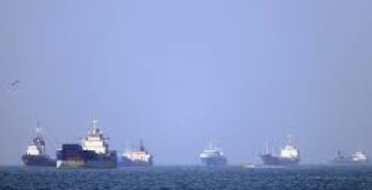
A fifth of global oil flows through the strait, along with vital fertilizer deliveries. If blockades persist, prices may spike out of reach. The UN cautions this could trigger extreme hunger where people already struggle. Supply networks might buckle under pressure. Starvation on a large scale becomes more likely when trade routes falter.
Even though France’s leader Emmanuel Macron says Paris won’t send warships into the strait unless everyone agrees, the group of 40 countries keeps pushing ahead. Their aim? A protected route meant to keep civilian shipping safe, built through shared effort.