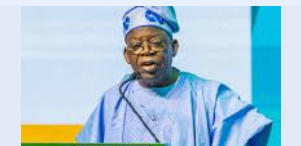
Nigeria’s government has officially flipped the switch on FreeTV, a new national digital television platform offering more than 100 channels at no monthly cost — the most visible deliverable yet from a Digital Switch-Over programme that has been promised, delayed, and re-promised for the better part of two decades.
The launch, announced through the Presidency’s official channels on Wednesday, frames FreeTV as part of President Tinubu’s Renewed Hope Agenda, with officials pitching it less as a television product than as an instrument of digital inclusion. National Broadcasting Commission Director-General Charles Ebuebu said the platform speaks directly to the goal of expanding access and opportunity regardless of where a Nigerian lives or how much they earn.
The lineup spans news, sport, movies, music, children’s programming, and education, alongside dedicated Yoruba, Hausa, and Igbo language channels — a deliberate signal that the platform is meant to serve Nigeria’s regional and linguistic diversity rather than simply replicate the kind of generic national programming that has dominated free-to-air television for years. Delivery runs across three channels: satellite, terrestrial transmission, and a dedicated mobile app, an approach designed to reach households in major cities and remote communities alike. The government has stressed that most Nigerians will not need new television sets — existing sets will work with compatible DVB-T2 or DVB-S2 decoders, and many households with free-to-air equipment may need nothing new at all.
Beyond the living room, the government is positioning FreeTV as an economic project. Plans include regional production studios in Lagos, Abuja, Port Harcourt, Enugu, Kano, and Benin City, intended to create jobs for producers, editors, camera operators, sound engineers, and other technicians — and to give independent and regional content creators, who officials say will be allocated a meaningful share of channel space, a route to national audiences they have historically struggled to reach.
The launch is not without its sceptics. The Digital Switch-Over programme has been running for roughly 17 years and has consumed an estimated ₦60 billion in public funds, with digital signal coverage so far reaching only a fraction of the country’s states. Industry voices have also questioned what “free” really means in practice. IBST Media founder Remi Ogunpitan pointed out that while FreeTV eliminates the subscription fee, it does nothing to address the other costs — electricity, decoders, satellite dishes, installation, mobile data — that determine whether a low-income rural household can actually access the service, fee or no fee.
The NBC has reiterated that Nigeria’s full analogue switch-off remains scheduled for December 31, 2028, positioning Wednesday’s launch as one milestone in a longer transition rather than its conclusion. Whether FreeTV becomes the digital inclusion tool the government describes, or simply the latest chapter in a switch-over saga that has tested public patience for nearly two decades, will depend on how quickly — and how completely — the promised coverage actually reaches the homes it is meant to serve.