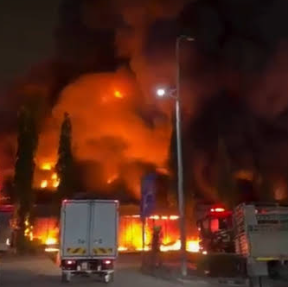
Nigeria’s Dangote Petroleum Refinery displaced the United States as Europe’s largest external supplier of jet fuel in June, shipping an estimated 466,000 metric tonnes of aviation fuel to the continent — its highest monthly volume since the facility began operations in 2024.
Data from S&P Global Commodity Insights’ Commodities at Sea platform showed Nigerian jet fuel exports to Europe nearly doubling month-on-month, rising from 232,000 metric tonnes in May to 466,000 metric tonnes in June. The shipment, equivalent to roughly 582.5 million litres, was valued at approximately 757 billion naira ($553 million).
Over the same period, U.S. jet fuel exports to Europe fell sharply, from a record 818,000 metric tonnes in April to 560,000 metric tonnes in May and then 399,000 metric tonnes in June, handing Nigeria the top spot.
The shift came against a softening European jet fuel market. Northwest Europe jet fuel prices fell from a record $1,694.25 per metric tonne in March to $981.75 by the end of June, as high refinery output and weaker-than-expected summer aviation demand left the market oversupplied. Traders said increased output from local European refineries, combined with strong exports from both the U.S. and Dangote, contributed to the glut, while some supply flows also resumed through the Suez Canal from the UAE.
Saudi Arabian exports to Europe jumped to about 106,000 metric tonnes in June from just 7,000 in May, while Indian shipments rose to 197,000 metric tonnes from 129,000, even as the United Arab Emirates and Kuwait were absent from the month’s tally.
Nigeria became a net jet fuel exporter in 2024 after the Dangote refinery began production, marking a shift for a country that had long relied on imported refined fuel despite holding substantial crude reserves. The company has also outlined a $46 billion plan to build additional refining capacity linking West and East Africa. Analysts said the durability of Europe’s current oversupply will depend on developments around the Strait of Hormuz and how quickly Middle Eastern refiners recover from recent disruptions.