Afreximbank Says Dangote’s Industrial Empire Shielding Africa From Global Shocks

Table of Content

The African Export-Import Bank (Afreximbank) said the Dangote Group’s refining and fertiliser operations have become a critical buffer protecting African economies from disruptions in global energy and commodity markets, as the bank reaffirmed its financial backing for the conglomerate’s expansion plans.

Speaking at Afreximbank’s Mid-Year Media Roundtable in Abuja, bank President and Chairman George Elombi said the Dangote Petroleum Refinery had proven its value during the recent Gulf crisis, when global oil prices spiked but African economies did not face fuel shortages. He said the refinery has also helped ease pressure on Nigeria’s foreign exchange demands by reducing the country’s reliance on imported fuel and enabling crude-for-naira transactions with local producers.

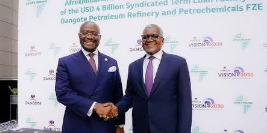
Elombi said the bank had committed an additional $2.5 billion toward expanding the refinery, building on earlier financing that made Afreximbank the largest single lender in a $4 billion syndicated loan facility supporting the project. He said similar refining, storage and pipeline infrastructure is being planned for other African countries, including Ethiopia, Kenya, Tanzania, Uganda, Angola, Chad, the Republic of Congo and Namibia, as part of a broader push to cut the continent’s dependence on imported refined petroleum products.

On fertiliser, Elombi said Dangote’s plant continues to supply major export markets including Germany and Brazil, though the bank is working to redirect a greater share of that output toward African countries to strengthen intra-African trade under the African Continental Free Trade Area framework.

Elombi’s comments follow Afreximbank’s earlier announcement of a $10 billion Gulf Crisis Response Programme launched in April to help African and Caribbean economies absorb the economic fallout from the conflict in the Middle East, including disruptions to fuel, fertiliser and food supply chains. The bank has also pledged continued support for Dangote Group’s broader ambition to grow annual revenue to $100 billion by 2030, a plan the conglomerate says will require at least $40 billion in new investment over the next five years.

support@paulkizitoblog.com

support@paulkizitoblog.com http://paulkizitoblog.com

Leave a Reply

Your email address will not be published. Required fields are marked *

Recent News

Trending News

Editor's Picks

Afreximbank Says Dangote’s Industrial Empire Shielding Africa From Global Shocks

The African Export-Import Bank (Afreximbank) said the Dangote Group’s refining and fertiliser operations have become a critical buffer protecting African economies from disruptions in global energy and commodity markets, as the bank reaffirmed its financial backing for the conglomerate’s expansion plans. Speaking at Afreximbank’s Mid-Year Media Roundtable in Abuja, bank President and Chairman George Elombi said the Dangote Petroleum Refinery had proven its value during the recent Gulf crisis, when global oil prices spiked but African economies did not face fuel shortages. He said the refinery has also helped ease pressure on Nigeria’s foreign exchange demands by reducing the country’s reliance on imported fuel and enabling crude-for-naira transactions with local producers. Elombi said the bank had committed an additional $2.5 billion toward expanding the refinery, building on earlier financing that made Afreximbank the largest single lender in a $4 billion syndicated loan facility supporting the project. He said similar refining, storage and pipeline infrastructure is being planned for other African countries, including Ethiopia, Kenya, Tanzania, Uganda, Angola, Chad, the Republic of Congo and Namibia, as part of a broader push to cut the continent’s dependence on imported refined petroleum products. On fertiliser, Elombi said Dangote’s plant continues to supply major export markets including Germany and Brazil, though the bank is working to redirect a greater share of that output toward African countries to strengthen intra-African trade under the African Continental Free Trade Area framework. Elombi’s comments follow Afreximbank’s earlier announcement of a $10 billion Gulf Crisis Response Programme launched in April to help African and Caribbean economies absorb the economic fallout from the conflict in the Middle East, including disruptions to fuel, fertiliser and food supply chains. The bank has also pledged continued support for Dangote Group’s broader ambition to grow annual revenue to $100 billion by 2030, a plan the conglomerate says will require at least $40 billion in new investment over the next five years. support@paulkizitoblog.com