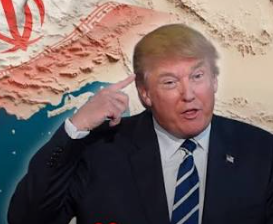
President Donald Trump said Monday the United States will take on the role of “guardian” of the Strait of Hormuz and will charge a 20% fee on all cargo shipped through the waterway, as fighting between Washington and Tehran intensified over control of the critical energy route.
Trump made the announcement on Truth Social, declaring that America would be reimbursed for the cost of providing security in the strait, saying the arrangement would take effect immediately. He said the fee applies broadly to cargo passing through the corridor, while adding that all countries except Iran will retain open and fair access. In earlier remarks on Fox News, Trump said the US had guarded the strait for decades without compensation while other nations profited, and argued it was time to be paid for the security burden going forward.
Trump also announced the reinstatement of a naval blockade against Iranian ports, saying it is intended only to block Iranian vessels and customers rather than restrict other nations’ shipping.
The declaration follows a sharp deterioration of the ceasefire reached earlier this year, with both sides having exchanged strikes over the past several days. Iran’s Revolutionary Guard has said Washington will not be permitted to take control of the strait under any circumstances and warned that any country cooperating with US military operations there would be treated as taking part in hostilities against Iran. Iran’s own Persian Gulf Strait Authority has said transit through the waterway remains unfeasible for now, citing ongoing US military activity.
The International Maritime Organization pushed back on the proposed toll, saying it has consistently opposed the imposition of fees for passage through straits used for international navigation and that no legal basis exists for such a charge. Shipping data show traffic through the strait, which normally carries about a fifth of the world’s oil trade, has slowed to a fraction of pre-war levels, with only a handful of vessels transiting daily compared with well over 100 before the conflict began in February.
Oil prices rose sharply on the announcement, extending gains from the past week’s escalation, while broader stock markets fell on renewed fears over the security of a route through which much of the world’s crude and gas supplies pass.