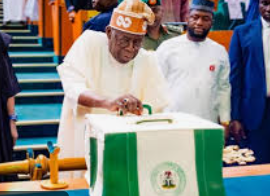

Nigerian President Bola Tinubu has transmitted a bill to the House of Representatives seeking constitutional backing to establish state police services across the country, in what would be the most significant restructuring of Nigeria’s policing system since democratic rule returned in 1999.
In a letter read on the floor of the House on Tuesday, Tinubu said the Constitution of the Federal Republic of Nigeria (Alteration) (State Police) Bill, 2026, would create a constitutional pathway for state police services to operate alongside the existing federal Nigeria Police Force. He said the bill builds on earlier work by the House and adds further safeguards to support a dual policing structure aimed at addressing the country’s evolving security challenges, and urged lawmakers to expedite its passage.
The transmission comes just under two weeks after the Senate passed its own version of the constitutional amendment, securing support from more than two-thirds of senators — the threshold required for constitutional changes. As a constitutional amendment, the bill must pass both chambers of the National Assembly with a two-thirds majority and then be ratified by at least 24 of Nigeria’s 36 state Houses of Assembly before it can be signed into law.
Nigeria currently operates a single, centrally controlled police force, a structure governors, lawmakers and security experts have long argued is overstretched given the scale of the country’s security challenges, including terrorism, banditry, kidnappings and communal conflict. Tinubu has pushed the state police proposal since February, arguing that states need greater capacity to respond to threats within their own territories.
Ahead of the constitutional process concluding, Tinubu last week inaugurated a Presidential Working Group, chaired by Chief of Staff Femi Gbajabiamila, to begin drafting a separate National Policing Bill that would operationalize the dual policing system, covering issues such as minimum policing standards, state funding conditions, federal-state coordination and human rights safeguards. Critics of the state police proposal, including some governors and civil society groups, have raised concerns about potential political misuse of state-controlled police forces by state governors.