The United States and Saudi Arabia signed a civil nuclear cooperation agreement on Wednesday that could eventually give the kingdom the ability to enrich its own uranium fuel, a step nonproliferation experts warned could edge Riyadh closer to nuclear weapons capability.
U.S. Energy Secretary Chris Wright and Saudi Energy Minister Prince Abdulaziz bin Salman signed the deal, formally known as a “123 agreement” under Section 123 of the U.S. Atomic Energy Act, alongside a companion bilateral safeguards agreement. The Energy Department described the pact as the legal foundation for a multi-billion-dollar, decades-long partnership between the two countries’ nuclear industries.
Under the agreement, American companies would build any Saudi enrichment facility and retain control of the underlying technology rather than transferring it to Riyadh, according to two U.S. officials. A joint U.S.-Saudi team would first assess whether enrichment is technically warranted and commercially viable before any facility is built. In the meantime, the deal bars Saudi Arabia from developing its own enrichment capability or acquiring it from other suppliers for ten years.
Notably, the agreement does not require Saudi Arabia to adopt the International Atomic Energy Agency’s “Additional Protocol,” the enhanced inspection regime sometimes called the “gold standard” for nuclear cooperation deals, which the United Arab Emirates accepted when it signed its own 123 agreement with Washington in 2009. That omission, along with limits on the scope of inspections under the new pact, is likely to draw scrutiny from lawmakers when the agreement goes before Congress for a mandatory 90-day review.
Energy Secretary Wright defended the agreement’s safeguards, saying it upholds high standards of nuclear safety and nonproliferation while relying on American nuclear technology and expertise. The deal is expected to run for 30 years and involve U.S. firms supplying reactor technology to the kingdom.
Saudi Crown Prince Mohammed bin Salman has said for years that the kingdom would pursue nuclear weapons if regional rival Iran ever built one, a position that has fueled concern among arms control advocates about any deal that leaves open a path to enrichment. The kingdom had previously resisted U.S. terms that would have ruled out enriching uranium or reprocessing spent fuel domestically, both of which are potential pathways to bomb-grade material.
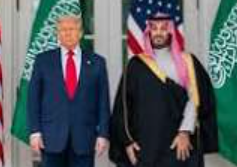
The agreement follows a joint declaration on civil nuclear cooperation signed by President Donald Trump and Crown Prince Mohammed bin Salman at the White House in November, part of a broader package of deals covering nuclear energy, arms sales, artificial intelligence and critical minerals.