
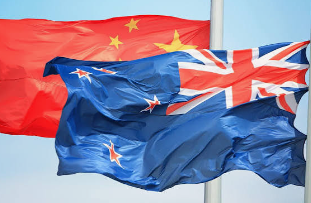
China’s embassy in New Zealand pushed back on Friday against a report from Wellington’s intelligence agency accusing Beijing of conducting espionage in the country “at scale,” calling the allegations baseless and politically motivated.
The New Zealand Security Intelligence Service (NZSIS) named China as the only state currently carrying out espionage activity against New Zealand at scale in its fourth annual Security Threat Environment assessment, published Thursday. The agency’s director-general, Andrew Hampton, described the threat landscape facing the country as the most difficult in recent memory and said espionage incidents were likely to increase over the coming year. The report also identified China as the most active source of foreign interference in New Zealand, an escalation from the previous year’s more measured “complex intelligence concern” label, and separately flagged the country’s United Front Work Department as engaged in efforts to build influence abroad.
Among the specifics cited, the agency said it had intervened to stop a covert attempt by an entity linked to China’s military, the Purple Mountain Observatory, to install what it called Ground Based Space Infrastructure inside New Zealand. It said a local firm involved in the project was likely unaware the equipment could be used to gather intelligence with military applications.
In its response Friday, the Chinese embassy said the accusations either mislabeled routine exchanges and cooperation as espionage or were invented outright, and accused unspecified actors inside and outside New Zealand of trying to undermine bilateral relations for political gain. The embassy argued the report itself might be a product of outside interference and said China’s relationship with New Zealand had been built on mutual benefit, generating trade, jobs and people-to-people ties. It urged those it described as “anti-China forces” not to use the relationship as a tool for their own ends.
The exchange adds to recent friction between the two countries. New Zealand has taken increasingly outspoken positions this year on issues including the South China Sea, Chinese missile testing and relations with Pacific Island nations, and joined other members of the Five Eyes intelligence alliance in June in warning about Chinese state-linked recruitment efforts on online job platforms.