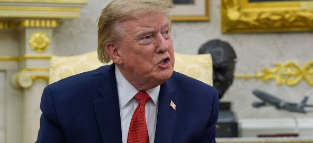
U.S. President Donald Trump said on Monday that Washington would not seek to extend a memorandum of understanding with Iran, as the agreement’s 60-day negotiating window expired without a broader settlement.
Asked by reporters whether the United States was pursuing an extension, Trump replied simply, “No.” He said Iran wanted an agreement but had not accepted terms Washington considers necessary to end the conflict, adding that Tehran was “not currently prepared to accept the US conditions.” Trump separately called on Iran to “put up the white flag of surrender.”
Iran’s Foreign Ministry spokesman, Esmail Baghaei, said Tehran was not seeking talks on an extension either, telling state news agency Tasnim that “the 60-day issue is not relevant” because the United States had violated the understanding from the outset. A senior Iranian official told Reuters there were no talks on extending the period and that Iran would shift toward offensive posture rather than a defensive one should diplomacy with Washington fail.
Known as the Islamabad Memorandum, the agreement was signed on June 17 by Trump and Iranian President Masoud Pezeshkian at a ceremony at the Palace of Versailles, with Pakistan serving as chief mediator and Qatar and Oman providing additional support. It called for an immediate halt to military operations on all fronts and set a 60-day window, extendable by mutual consent, for a final settlement covering Iran’s nuclear program, sanctions relief, a reconstruction package worth at least $300 billion, and reopening the Strait of Hormuz.
The arrangement began unravelling quickly: Trump declared it “over” on July 7, while Iran accused Washington of violating its terms from the start. Direct negotiations have since stalled, and normal shipping traffic through the Strait of Hormuz has yet to be restored, with vessel crossings at a near standstill in recent days.
Oil prices rose on the news, with U.S. crude settling up 2.6% at $84.50 a barrel and Brent gaining 2.7% to $90.87.