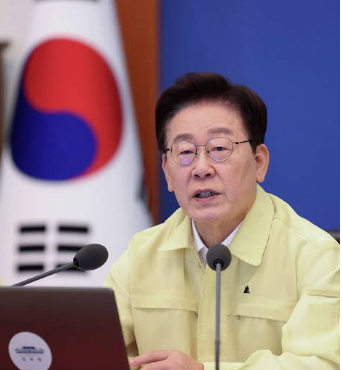
South Korean President Lee Jae-myung said on Tuesday that a strong alliance with the United States underpins the country’s national security, as officials and the public in Seoul remained uncertain about the scope of a sudden U.S. order to scale back joint military exercises.
Speaking at a regular cabinet meeting, Lee said national security would be reinforced the more solid the alliance becomes, adding that South Korea’s growing capabilities would in turn raise its value and importance as a U.S. partner. Lee, a liberal leader who has pushed for a more self-reliant defence posture, did not specify which elements of the drills would be affected.
Trump announced the reduction in a social media post just before the annual 11-day Ulchi Freedom Shield exercises were due to begin this week, drills designed largely to sharpen readiness against North Korean threats. It remains unclear which components of the joint exercises are being scaled down; South Korean and U.S. militaries had earlier said this year’s drills would match previous years in scale and incorporate lessons from recent conflicts.
Lee’s office said Seoul and Washington are in close discussions over practical and military contributions South Korea could make to help restore freedom of navigation through the Strait of Hormuz, suggesting a possible link between the drill reduction and broader security burden-sharing talks.
Leif-Eric Easley, a professor at Ewha University in Seoul, said Trump tends to treat the alliance as an investment expected to generate returns, or a reserve he can draw on when other initiatives stall, adding that South Korean officials understand ties with the Trump administration will involve constant renegotiation linking economic and security matters.
A recent survey by the JoongAng Ilbo newspaper and the Seoul-based East Asia Institute found 46.4% of South Korean respondents viewed the United States as “not a trustworthy partner,” against 45.4% who called it trustworthy — the first time distrust has outweighed trust since the institute began tracking the question in 2017.