
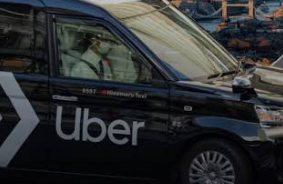
Uber and British startup Wayve began commercial robotaxi rides in London this week, giving passengers a taste of autonomous driving in one of the most demanding urban environments the technology has faced, though safety drivers remain on board to comply with current U.K. regulations.
The initial fleet consists of 15 electric Ford Mustang Mach-E vehicles fitted with Wayve’s self-driving system. Passengers cannot request the autonomous vehicles directly through the Uber app; instead, riders booking a standard trip may occasionally be matched with a Wayve car, which they can accept or decline, at the same fare as a normal ride. The vehicles are not yet permitted to make airport runs, though they can otherwise travel anywhere in the city.
British regulators have not yet cleared fully driverless operation, so a human supervisor sits behind the wheel throughout each trip, ready to take control or brake if needed. Alex Kendall, Wayve’s chief executive, said London presented a far tougher testing ground than U.S. cities such as San Francisco, citing the city’s dense layout, centuries-old road network, heavy roundabout use, and pedestrian and cyclist volumes he said run more than ten times higher than in typical American markets. In one test ride, a CBS News crew found the vehicle navigated autonomously for much of the trip but required driver intervention after becoming stuck attempting to pass through a narrow street.
London becomes only the second European city, after Zagreb, to host a public robotaxi service; the Croatian capital’s service, run by Verne using technology from China’s Pony.ai, likewise keeps a safety supervisor aboard. Uber’s global head of autonomous mobility, Sarfraz Maredia, said he did not see the technology posing a near-term threat to London’s black cab drivers, whose ranks have fallen from roughly 25,000 in 2010 to about 16,000 today, arguing instead that autonomous vehicles are more likely to help meet growing overall demand for rides.
The launch comes as competition intensifies for London’s fledgling robotaxi market, with Alphabet-owned Waymo and Chinese firm Baidu, the latter partnered with Lyft, both preparing their own entries pending regulatory approval under the U.K.’s 2024 Automated Vehicles Act.