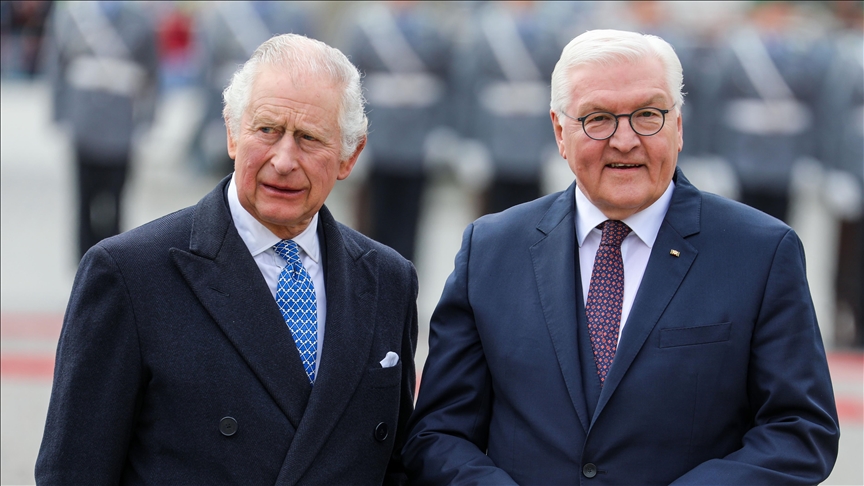
When Windsor Castle’s ancient stone walls met golden candlelight and soft holiday glow, history was quietly — yet powerfully — in the making. On the evening of December 3, 2025, King Charles III and Queen Camilla hosted a state banquet in honour of German President Frank-Walter Steinmeier and his wife at St George’s Hall. It wasn’t just another regal dinner; it was a deliberate blend of tradition, symbolism, and modern geopolitics.
The castle was transformed into a festive wonderland: a six-metre (around 20-foot) Nordmann fir — the first-ever Christmas tree to grace a modern UK state banquet — stood tall in the hall, its lights reflecting off polished mahogany, velvet gowns, and sharp tuxedos.
More Than Celebration: A Statement of Renewed Partnership
This banquet marks the first visit by a German head of state to the UK in 27 years — a powerful moment of reconciliation and renewed cooperation between two major European nations.
In his speech, King Charles spoke partly in German — a considerate nod to shared heritage and mutual respect — stressing that the United Kingdom and Germany stand united: “side by side … for a free, peaceful Europe,” especially in support of Ukraine amid ongoing tensions with Russia.
President Steinmeier echoed the tone of unity: the evening was not just about royal pomp — it was about solidarity, shared values, and a commitment to face global challenges jointly.
The timing isn’t accidental. Under the recently signed Kensington Treaty (July 2025), the UK and Germany pledged closer cooperation across defence, migration, trade, and education — making the banquet less ceremonial and more strategic.
Diplomacy with Flair: When Form Meets Purpose
But the evening wasn’t all politics and treaties. From the carriage procession into Windsor, the 41-gun salute, guard of honour, to the intimate personal gestures: King Charles greeting Steinmeier with warmth and a friendly arm-around handshake — optics matter, and these subtle signals conveyed genuine camaraderie.
Inside the hall, the lavish yet tasteful décor — garlands, festive lights, trusted royalty and dignitaries gathered — reflected a blend of British tradition and a modern, inclusive European spirit. The palette of ceremony and charm reminded all present: diplomacy can be both serious and graceful.
Why It Matters — For Europe, For Diplomacy, For History
- A renewed alliance at a fragile time: With Europe still grappling with instability and conflict, this visit underlined unified western resolve. The symbolic support for Ukraine defined much of the evening’s tone.
- Post-Brexit message: The UK and Germany are publicly reaffirming that despite economic and political shifts, cooperation remains central — and perhaps more urgent than ever.
- Soft power meets solemn duty: Through pageantry and ritual, both nations signalled that history and heritage can be harnessed for meaningful present-day collaboration.
- A rare royal-diplomatic moment: For the British monarchy, hosting three state visits in one year — the first time since 1988 — underscores renewed relevance.
In Summary
That night at Windsor Castle was not just a banquet — it was a moment. A moment when history, diplomacy, tradition and timeliness merged. Lights twinkled on the Christmas fir, dignitaries dined under vaulted ceilings, and two powerful nations reaffirmed an alliance rooted in trust, memory, and mutual ambition.
Europe — and the world — was watching. And at that banquet, a signal was sent: unity, respect, and cooperation are not relics of the past — they remain the currency of true leadership.
References

King Charles hosts German president at festive state banquet

Royal family host German president on state visit – latest updates

Germany’s president gets a royal welcome at start of the first UK state visit in 27 years
We stand together with Ukraine, King tells German president on state visit