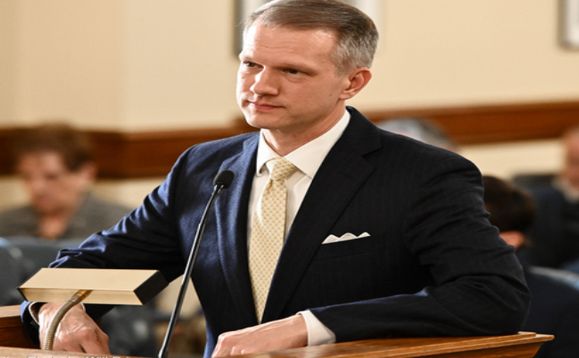
The recent call by U.S. lawmaker Riley Moore for stronger implementation of counter-terrorism agreements has sparked important conversations about Nigeria’s security situation. While some have interpreted the statement as criticism, a balanced view shows it is more accurately a reflection of the complex realities of fighting modern terrorism — a challenge Nigeria has been actively confronting for years.
Nigeria’s Efforts Are Real and Ongoing
Nigeria is not a passive actor in the fight against terrorism. For over a decade, the country has been engaged in sustained military, intelligence, and community-based operations against violent groups such as Boko Haram, ISWAP, and organised criminal networks.
Significant progress has been recorded, including:
- Reclaiming territories once controlled by insurgents in the North-East
- Disrupting major terror cells and leadership structures
- Strengthening collaboration with neighbouring countries through the Multinational Joint Task Force (MNJTF)
- Rescuing and rehabilitating thousands of victims
These efforts reflect a national commitment that deserves recognition.
Why Implementation of Agreements Still Matters
Riley Moore’s main point — that agreements must be implemented, not just signed — is not unique to Nigeria. It is a global challenge in counter-terrorism. Many countries struggle to translate diplomatic agreements into consistent operational results because of:
- Funding limitations
- Bureaucratic delays
- Rapidly changing terrorist tactics
- Difficult terrain and porous borders
In Nigeria’s case, implementation challenges are often tied to the sheer scale of the threat and the regional instability across the Sahel.
A Regional, Not Just Nigerian, Problem
Nigeria’s security situation cannot be understood in isolation. Weapons and fighters flow across borders from conflict zones in Mali, Burkina Faso, Libya, and Niger, creating a transnational security challenge.
This is why stronger international cooperation is not about blaming Nigeria — it is about recognising that no single country can handle this threat alone.
What Nigeria Has Already Put in Place
To its credit, Nigeria has strengthened internal systems in recent years:
- Creation and expansion of the Nigerian Financial Intelligence Unit (NFIU)
- Stronger anti–money laundering regulations
- More intelligence-driven military operations
- Improved monitoring of terror financing
These reforms show that Nigeria is not ignoring the problem, but actively modernising its approach.
Where More Work Is Still Needed
A balanced assessment also acknowledges that challenges remain:
- Some rural and border areas are still vulnerable
- Intelligence sharing can be faster and more coordinated
- Equipment and logistics gaps still exist
- Implementation of some international agreements can be more consistent
Recognising these gaps is not an attack on Nigeria — it is part of honest nation-building.
The Role of International Partners
Statements like Riley Moore’s should be viewed in the spirit of partnership rather than pressure. Nigeria does not need lectures; it needs:
- More timely intelligence support
- Better access to modern surveillance and counter-terror tools
- Fairer, more practical cooperation frameworks
Security partnerships work best when they are built on mutual respect.
Conclusion: Shared Responsibility, Shared Goals
Nigeria is doing the hard work. Its soldiers and security agencies continue to make sacrifices daily. At the same time, terrorism remains a complex, evolving threat that demands better implementation of international agreements and deeper cooperation.
Riley Moore’s comments, when viewed fairly, are not an indictment of Nigeria — they are a reminder that security is a shared global responsibility.
✅ References
1. Reuters – Nigeria–U.S. Talks on Counter-Terrorism (Riley Moore Statement)
Confirms Riley Moore’s comments on strengthening Nigeria–US security cooperation and destroying terrorist networks.
Reuters
2. Vanguard Nigeria – “If Agreements Are Implemented, Terrorism in Nigeria Will Be Destroyed”
Direct local report of Riley Moore’s remarks after meeting Nigeria’s National Security Adviser.
Vanguard News
3. U.S. Congress Research Service – Nigeria: Overview and U.S. Policy (CRS Report)
Background on US–Nigeria security cooperation and counter-terrorism efforts.
congress.gov
4. Combating Terrorism Center, West Point – Terrorism and Illicit Finance Networks
Explains how terrorist networks are sustained through organised crime and finance, relevant to Nigeria’s challenges.
Combating Terrorism Center at West Point
5. U.S. Department of Homeland Security – Global Counterterrorism Environment
Supports the claim that terrorism today is transnational and complex, requiring international cooperation.
Department of Homeland Security