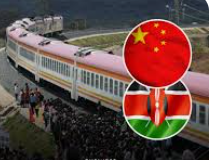
Kenya’s flagship rail line—the Mombasa–Nairobi Standard Gauge Railway—has become more than a transport corridor. It is now a test case for how global powers build, finance, and influence infrastructure across Africa.
As competition and cooperation between China and Western partners intensify, the question is no longer who builds Africa’s infrastructure—but how.
Speed vs. Structure
The railway reflects a model China has refined over decades: fast delivery, centralized financing, and integrated execution. The line was completed in record time, linking Mombasa to Nairobi and transforming passenger and freight movement along one of East Africa’s busiest corridors.
For many African governments, this approach solves a critical problem—projects that once took decades can now be delivered in years.
Western-backed models, by contrast, tend to prioritize process: feasibility studies, environmental safeguards, and competitive procurement. While these steps improve accountability, they often slow delivery.
Kenya’s railway highlights the tension between urgency and oversight.
The Cost of Acceleration
Yet speed has its trade-offs. The project has faced scrutiny over debt sustainability, cost transparency, and long-term returns.
Critics argue that:
- Financing terms placed significant pressure on public finances
- Local industry participation remained limited
- Economic gains have not fully matched initial projections
These concerns have become central to how Western institutions evaluate large-scale infrastructure investments in Africa.
Toward a Hybrid Model
What makes Kenya’s case particularly important is what came next.
As expansion plans encountered funding constraints, Nairobi began exploring alternative financing structures—less reliant on sovereign debt and more focused on shared risk and diversified investment.
At the same time, China has shown signs of adapting its own approach, moving toward:
- Smaller, more commercially viable projects
- Partnerships rather than full-spectrum control
- Greater sensitivity to debt sustainability concerns
This convergence is where the Kenyan model becomes instructive.
A Framework for Cooperation
Rather than choosing between competing systems, the future may lie in combining them.
A blended approach could look like this:
- Chinese strengths: execution speed, infrastructure expertise, financing capacity
- Western strengths: governance standards, transparency, sustainability frameworks
Together, these elements could produce projects that are both efficient and resilient.
Africa’s Strategic Leverage
For African countries, the real significance of Kenya’s railway lies in leverage.
The continent is no longer a passive recipient of investment. Instead, it can:
- Negotiate better terms
- Demand higher standards
- Structure deals that balance speed with long-term viability
Kenya’s experience shows that infrastructure partnerships are evolving—and that African governments can shape that evolution.
The Bottom Line
The Mombasa–Nairobi railway is not a perfect model. It is something more valuable: a learning curve.
It demonstrates what works, what doesn’t, and what must change.
For China and Western partners alike, the lesson is clear:
Africa’s infrastructure future will not be built by one model alone—but by a convergence of approaches that blend efficiency with accountability.