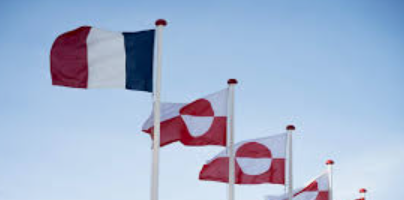
Greenland has found itself at the center of growing international attention as Canada and France officially
opened new consulates in Nuuk, the island’s capital. The diplomatic move comes at a time when the Arctic territory is gaining renewed strategic importance, especially amid increasing interest from the United States under President Trump.
Both countries say the new consulates are meant to strengthen cooperation with Greenland and Denmark on a range of shared priorities, including climate change, Arctic security, scientific research, Indigenous engagement, and economic development. However, the timing of the openings has sparked wider discussion about the geopolitical significance of Greenland in today’s shifting global landscape.
Greenland, though part of the Kingdom of Denmark, has long been viewed as strategically valuable due to its location in the Arctic and its rich natural resources. In recent months, President Trump has once again raised the profile of the island, publicly emphasizing its importance to U.S. security interests and suggesting Washington should have greater influence in the region.
While no formal change in Greenland’s status has occurred, Trump’s comments have added pressure and heightened sensitivities around sovereignty and foreign involvement in the Arctic. In that context, Canada and France’s decision to expand their diplomatic presence is being widely interpreted as a signal of support for Greenland’s autonomy and Denmark’s territorial integrity.
France’s consulate is particularly notable, as it represents one of the first major European Union diplomatic missions established directly in Nuuk. Canada, meanwhile, has highlighted its shared Arctic identity with Greenland and the importance of building stronger regional partnerships.
The opening of these consulates reflects a broader reality: the Arctic is no longer a distant frontier but an increasingly important arena for global competition, cooperation, and diplomacy. As climate change opens new shipping routes and resource opportunities, Greenland’s role on the world stage continues to grow.
For Greenland, the expanded diplomatic engagement may bring new economic and political opportunities, but it also underscores how the island is becoming a focal point in the evolving power dynamics of the Arctic.