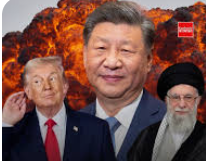
China has advised its citizens to leave Iran as quickly as possible, signaling growing international anxiety over rising tensions in the Middle East and the possibility of sudden security deterioration. The advisory,
issued through official diplomatic channels, reflects Beijing’s assessment that the regional environment has become increasingly unpredictable, prompting precautionary measures aimed at protecting Chinese nationals living, working, or traveling in the country.
The warning marks a significant moment because China traditionally adopts cautious language in overseas travel advisories, especially toward countries with which it maintains strong diplomatic and economic ties. Iran has long been an important partner for Beijing in energy cooperation and regional trade initiatives, making the evacuation recommendation notable not only as a safety measure but also as an indication of how seriously Chinese authorities view the evolving situation.
Chinese officials urged citizens currently in Iran to monitor security developments closely, strengthen personal safety awareness, and depart while transportation routes remain open. Embassies and consulates were instructed to provide assistance and guidance, including information on commercial flights and possible overland exit options. Authorities also discouraged new travel to Iran, emphasizing that risk levels could change rapidly depending on geopolitical developments.
The advisory comes amid heightened tensions linked to disputes surrounding Iran’s nuclear programme and increased military activity across the region. Diplomatic negotiations have faced repeated setbacks, while military posturing by global powers has raised fears that miscalculation or escalation could lead to confrontation. In such environments, foreign governments often act early to reduce risks to civilians abroad, knowing that evacuation becomes far more complicated once a crisis escalates.
China’s move aligns with a broader international trend, as several countries reassess the safety of their nationals in sensitive regions. Travel advisories are often among the first visible indicators that governments anticipate potential instability. Although such warnings do not necessarily mean conflict is imminent, they reflect strategic caution based on intelligence assessments, regional developments, and contingency planning.
For China, protecting overseas citizens has become an increasingly important aspect of foreign policy. Over the past two decades, the country has seen a rapid expansion of its global workforce, with millions of Chinese nationals living or working abroad across infrastructure projects, energy ventures, and commercial enterprises. As China’s international presence grows, so too does the responsibility to respond quickly when security conditions deteriorate.
The situation also highlights how interconnected global security has become. Events in one region can quickly influence diplomatic decisions thousands of kilometers away, affecting travel, trade, and investment flows. Businesses operating in Iran may face uncertainty as foreign workers depart or postpone projects, while airlines and logistics networks may adjust operations depending on risk assessments.
Analysts note that evacuation advisories often serve dual purposes. Beyond safeguarding citizens, they send subtle diplomatic signals about concern levels without escalating political rhetoric. By framing the move as a precaution rather than a political statement, governments can prioritize safety while maintaining diplomatic balance. China’s language has remained measured, emphasizing caution rather than assigning blame or predicting conflict.
The development also underscores the fragile nature of stability in the Middle East, where long-standing rivalries, security disputes, and shifting alliances continue to shape international relations. Even periods of relative calm can quickly give way to uncertainty, prompting governments to prepare for worst-case scenarios. In recent years, global powers have increasingly relied on early warnings and voluntary departures as tools to minimize risk exposure.
For ordinary citizens, such advisories can create difficult decisions. Many expatriates weigh professional obligations, family considerations, and financial commitments against safety concerns. Governments typically encourage voluntary departure first, reserving organized evacuations for situations where commercial travel becomes unavailable. The emphasis on leaving while routes remain open suggests authorities aim to avoid emergency operations later.
China’s announcement also reflects a broader evolution in diplomacy where citizen protection is central to national image and credibility. Modern governments are judged not only by their foreign policy positions but by how effectively they safeguard citizens abroad during crises. Rapid communication, consular coordination, and clear guidance have become essential elements of international crisis management.
While the long-term trajectory of regional tensions remains uncertain, the advisory signals that major global players are preparing for potential instability. Whether the situation stabilizes through renewed diplomacy or escalates into deeper confrontation will shape not only regional dynamics but also global energy markets, trade routes, and international security calculations.
For now, China’s message to its citizens is rooted in caution rather than alarm: leave early, remain vigilant, and prioritize safety amid an unpredictable geopolitical landscape. The decision reflects a broader reality of the modern world, where diplomacy, security, and civilian mobility are increasingly intertwined, and where governments must respond swiftly to risks that can evolve faster than traditional political processes.